
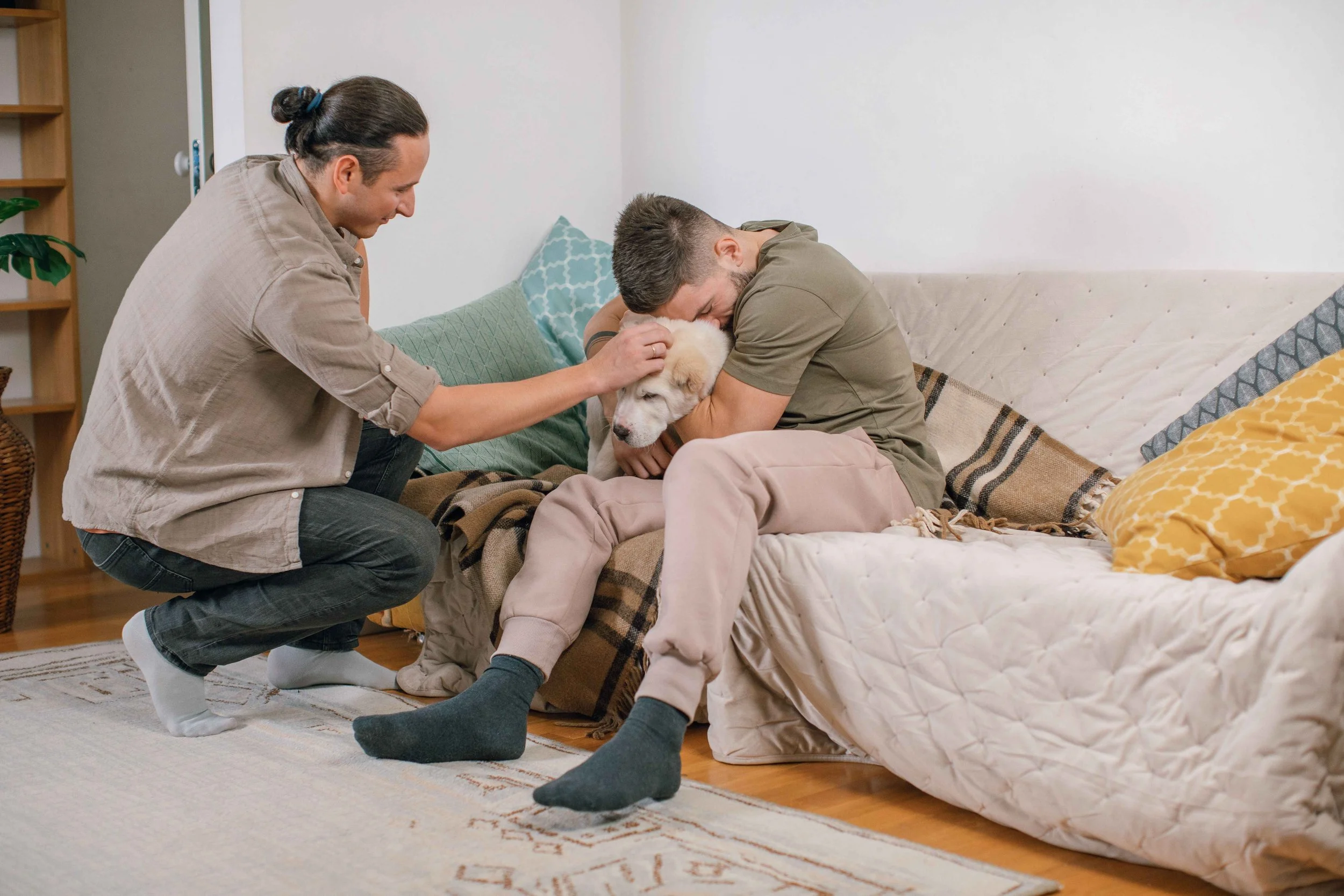
If your dog hears your keys in the door and is already waiting by the time you walk in, or your cat curls into your lap on the exact night you need it most, you already know your pet does something for you. You've probably wondered if that's just in your head, or if there's something real behind it. There is. Emotional support animal benefits are the measurable ways a pet you're bonded to calms your body and mind, and they're backed by research on stress hormones, your nervous system, and the way you experience anxiety and loneliness day to day.
You don't need an official Emotional Support Animal (ESA) letter for any of this to apply to you. This post walks through what's happening in your body when you're with your pet, why some pets seem to help more than others, and where a pet's support has real limits. By the end of this, you'll know what the research shows, what to look for in your own relationship with your pet, and when it's time to bring in more support than your pet alone can give you.
Anchor Therapy is a counseling center in Hoboken, NJ with mental health therapists specialized in helping children, teens, adults, couples, and families with anxiety, depression, relationship issues, trauma, life transitions, and more. Anchor Therapy is accepting new clients and is now providing in-person sessions and teletherapy sessions to residents of New Jersey, New York, and Florida.
What Are the Benefits of Emotional Support Animals?
Emotional support animal benefits include measurable drops in stress hormones, a calmer nervous system, and lower reported loneliness that come from touch and regular contact with a pet you're bonded to. You can get these effects from your everyday bond with your pet, with or without an official ESA letter.
That distinction matters because the phrase "emotional support animal" gets used two different ways. One is legal. An Emotional Support Animal, or ESA, is a specific category that requires a letter from a licensed mental health provider and comes with certain housing protections. The other is descriptive: any pet that provides you comfort and support day to day.
We'll get into the legal side of an ESA letter later in this post. For now, the research below is about the everyday psychological benefit, since that's the part most people searching this topic want to understand.
What Happens in Your Body When You're With Your Pet
At Anchor Therapy, we hear this often from clients managing anxiety or depression: their pet is the one thing that reliably gets them out of bed on a hard morning. There's a physical reason for that. A 2022 systematic literature review of the psychophysiological mechanisms behind human-dog interactions, covering 129 studies, found consistent increases in oxytocin and heart rate variability alongside decreases in cortisol, the hormone most closely tied to stress, during and after contact with a dog.
This is part of why a bad day can feel more manageable with a pet nearby. It's a physiological shift documented across a large body of research. Your nervous system settling and your stress hormones dropping are things your body is actively doing.
If you deal with anxiety that shows up physically, in your chest, your breathing, or a racing heart, this kind of grounding through touch and routine contact is one piece of a bigger toolkit. Our post on calming physical anxiety symptoms walks through several other approaches that work alongside what your pet already gives you.
Emotional Support Pets vs. Official Emotional Support Animals
An emotional support pet, in the everyday sense, is any animal that brings you comfort. There's no paperwork involved. An official ESA is a legal category. It requires a letter from a licensed mental health provider stating that the animal is necessary for your mental health, and it comes with specific protections, mainly around housing.
You don't need an ESA letter to get real psychological benefit from your pet. The letter matters if you're dealing with a landlord or a housing situation that requires documentation. It doesn't change what's happening in your body when your dog leans against your leg during a stressful phone call, or when your cat settles onto your chest while you're trying to fall asleep.
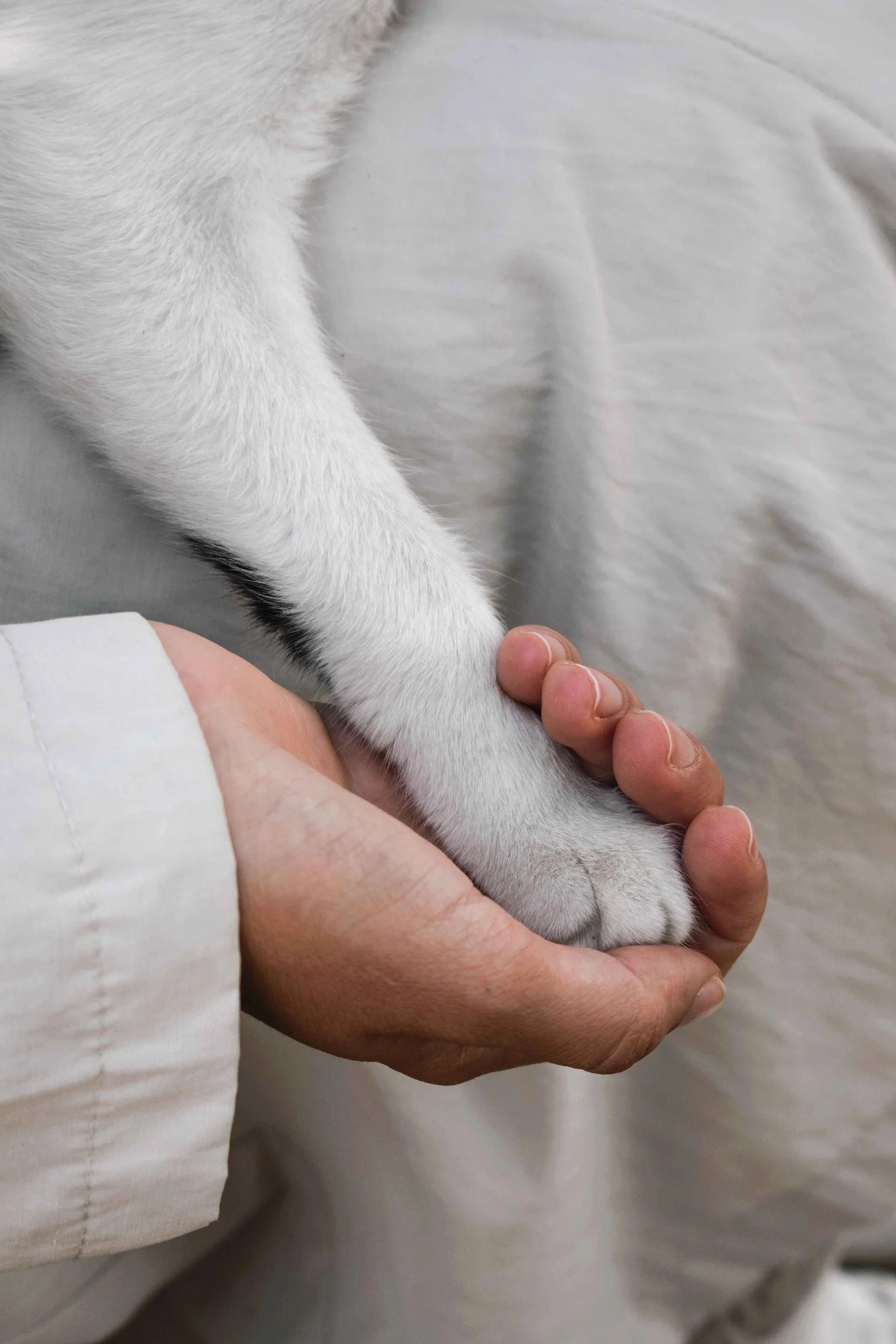
Can Pets Help With Anxiety? Here's What the Research Shows
Yes, pets can help with anxiety in the moment, mostly through the calming response in your body described above. Stroking a dog or sitting with a cat can take the edge off a spike of worry. The research is more mixed on whether owning a pet lowers your risk of anxiety or depression over time.
A 2025 systematic review and meta-analysis in Annals of General Psychiatry looked at the depression side of that question. Across 21 studies and more than 159,000 participants, pet ownership overall wasn't linked to a meaningful change in depression risk. Dog ownership showed no significant effect either way, and cat ownership was tied to a slightly higher risk of depression.
That might sound discouraging if you were hoping for a simple "pets fix your mental health" answer. It's still useful information, because it tells you that owning a pet by itself isn't the mechanism doing the work. What matters more is the specific relationship you have with that pet, which is exactly what the next section gets into!
Pets and Mental Health: Why the Bond Matters More Than Just Having a Pet
A PLOS One study of 600 young adults in the UK who were struggling with anxiety or low mood, 341 with dogs and 259 with cats, looked past simple ownership at the relationship itself. Dog owners who felt more anxious and insecure in their bond with their dog tended to report more anxiety and depression. How compatible owners felt with their dog, especially around affection, was part of that link.
This lines up with what we see clinically. Many of the clients we work with in Hoboken describe a specific pet as central to how they get through hard days, and when we dig into that, it's almost always about the relationship itself: the routine, the physical closeness, the sense of being needed.
Here's what a strong bond with a pet tends to look like in practice:
Your body feels noticeably calmer when you're with them, in a way that's different from relaxing on your own
You feel steadier after time with them, and the feeling lasts longer than a quick distraction
They give your day structure, like a walk schedule or a feeding routine you build your morning around
You feel their absence physically when they're away, like something in your routine or your body is off
You feel safer or less alone with them in the room, even when nothing else about your day has changed
If most of these sound familiar, your pet is likely doing more real psychological work for you than a generic "do you own a pet" survey question would ever capture, since that kind of survey has no way to measure any of this.
Pets, Loneliness, and Smaller Social Circles
Research from the early COVID-19 lockdowns found something similar: pet owners with fewer opportunities for in-person human contact leaned on their pets for comfort more heavily than pet owners with a bigger social circle. In plain terms, the less human contact someone had, the more their pet's presence seemed to matter for how alone they felt.
If your life circumstances have shrunk your social world right now, whether that's a move, a breakup, or working from home, this is one of the more useful findings here. Your pet may be carrying more emotional weight right now than it would if your social circle were larger. We've written more about this pattern in our post on the loneliness epidemic, including what tends to help when human connection feels harder to come by.
This also connects to something we've written about before. In our post on coping with the death of a pet, we talk about how the intensity of that grief is often tied directly to how much real emotional support the pet provided. The connection makes sense when you consider how closely that bond works both ways.

When a Pet Isn't Enough on Its Own
In our clinical experience, one of the harder moments in a first session is when a client says something like, "I feel guilty even bringing this up, my dog is usually enough." A pet can lower your stress hormones and give your day structure. A pet can't treat clinical anxiety or depression on its own, and it was never designed to.
Needing more support than your pet can give you usually means the weight you're carrying has outgrown what any one relationship, animal or human, can hold by itself. You haven't failed at anything by getting to that point.
This is especially true if your anxiety or depression has started to affect your sleep, your work, or your relationships in ways that don't improve even on days you spend a lot of time with your pet. That's usually the signal that it's time to talk with an anxiety therapist alongside whatever comfort your pet already gives you.
Do You Need an ESA Letter to Get These Benefits?
No, you don't need an ESA letter to get the everyday psychological benefits described in this post. An ESA letter is about legal protections, mainly housing, like being able to live with your pet in a building that otherwise restricts animals. Your nervous system responds to your pet's presence whether or not a letter exists.
If you're considering an ESA letter for housing reasons, that's a conversation to have with a licensed mental health provider who knows your specific situation. Whether an animal is considered necessary for your mental health under the law is a separate clinical question from whether having your pet around makes a difference in your day-to-day life.
Building Pets Into a Real Support System
The healthiest way to think about your pet's role is as one part of a larger support system, alongside the people in your life and, when needed, a therapist. Many of the clients we work with in Hoboken describe their pet as the thing that gets them through the hardest hour of a bad day, while therapy is what helps them understand why that day was so hard in the first place. A pet can offer comfort when someone is having a particularly difficult day, while therapy can help them work through the deeper reasons they’re struggling. Both can have an important place in someone’s support system.
If you're noticing that your pet has become your main or only source of comfort, that's something to keep in mind, since it may mean you've been carrying more alone than you need to.
A few signs it might be time to add more support:
Your pet is the only thing keeping you regulated on hard days, and you don't have a backup plan for when that's not enough
You've stopped reaching out to people because managing your pet feels easier than managing a conversation
Your anxiety or low mood is affecting your sleep, appetite, or work, regardless of how much time you spend with your pet
You've noticed yourself feeling guilty for needing more than your pet can give you
Getting Support Beyond Your Pet
Your pet's support is real, and it's backed by research on stress hormones, attachment, and loneliness. It’s also not meant to be the only thing helping you through a difficult time. A dog waiting by the door or a cat settling into your lap can carry you through a rough evening, but it can't untangle why so many of your evenings keep feeling that hard in the first place. That part of the work usually takes another person who can ask the right questions back.
If any of this sounds like where you're at right now, reaching out to a therapist can help you build the rest of that support system around what your pet already gives you. You don't have to choose between the comfort your pet provides and getting more structured support. Most people end up needing both.
The team at Anchor Therapy works with clients in Hoboken, and virtually throughout New Jersey, New York, and Florida. You can learn more about our team on our Meet Our Team page, browse the rest of our work on our home page, and get in touch through our intake form below.

Victoria Scala, LAC
is the Psychotherapist, Community Engagement Director, Office Manager, and Social Media Manager at Anchor Therapy in Hoboken, New Jersey.
IF YOU’RE LOOKING FOR HELP FROM A PROFESSIONAL COUNSELOR TO ASSIST YOU IN MAKING POSITIVE CHANGES IN YOUR LIFE, CONTACT US
WORKING WITH US IS EASY
Fill out the contact form below.
Our intake coordinator will get back to you with more information on how we can help and to schedule an appointment. We will set you up with an experienced licensed therapist who specializes in what you're seeking help with and who understands your needs.
You’ll rest easy tonight knowing you made the first step to improve your life.
Having trouble with this form? Email us directly at info@anchortherapy.org with the information in the form.



Maybe you're the one who gets blamed no matter what actually happened, at home, at work, or even with friends. Something goes wrong, and somehow it lands on you. If that sounds familiar, there's a word for what's happening: scapegoat. A scapegoat is a person who's unfairly blamed for problems they didn't cause. Scapegoating shows up most in families, where it's often called being the family scapegoat.