

You're 34, and you manage a team at a job where difficult conversations are an ordinary part of your week. Then you walk into your parents' house for a holiday, and within ten minutes you're standing between your mother and your brother, smoothing over an argument exactly the way you did when you were eleven.
Dysfunctional family roles are the fixed parts each family member plays to keep the household running when something inside it isn't working. If your family was under strain, it probably had several of them. This post explains how those roles develop during childhood and why you and your sibling ended up with different ones. It also covers what it takes to step out of yours now.
Anchor Therapy is a counseling center in Hoboken, NJ with mental health therapists specialized in helping children, teens, adults, couples, and families with anxiety, depression, relationship issues, trauma, life transitions, and more. Anchor Therapy is accepting new clients and is now providing in-person sessions and teletherapy sessions to residents of New Jersey, New York, and Florida.
What Are the Roles in a Dysfunctional Family?
The five dysfunctional family roles described most often are the hero, the scapegoat, the lost child, the mascot, and the caretaker. Each one is a job that lowers the tension at home, and each one protects the family from a problem the parents haven't been able to address directly.
Here's how each role appears during childhood:
The hero earns the grades and the awards, which gives the family an achievement to point to.
The scapegoat gets the blame when something goes wrong, including problems that have little to do with them.
The lost child stays quiet and asks for very little, often spending hours alone.
The mascot uses humor or silliness to break the tension in a room.
The caretaker manages a parent's emotions or takes responsibility for younger siblings.
Earlier research described the first four, and a 2021 study in The Family Journal added the caretaker to account for children who take over a parent's responsibilities. At Anchor Therapy, we often see these roles in families dealing with many kinds of strain, including a parent's untreated depression or a high-conflict marriage.
Two of these roles have close relatives with their own posts on our blog. The hero overlaps considerably with the favored child, and you can read more about what it's like being the golden child. If blame is the part you recognize, our post on family scapegoat signs covers that role in detail.
Family Roles Psychology and the Job Each Role Does
Your family operates like a system, which means that when one part is under strain, the other parts adjust to keep everything steady. In family roles psychology, each role is one of those adjustments, and each one solves a specific problem for the group.
Each role handles something the family can't face directly:
The hero's success reassures the neighbors, and the parents themselves, that the family is doing fine.
The scapegoat gives everyone a target for their frustration, so the larger problem stays untouched.
The lost child asks for nothing, which leaves more attention available for the crisis.
The mascot's humor gives a tense room a moment of relief.
The caretaker does the emotional or practical work that a parent has stopped doing.
Your family probably had a funny one and a responsible one, and in a stable home, you and your siblings get to trade those parts back and forth as you grow.
A clinical review of family dynamics on the NCBI Bookshelf lists flexibility among the factors that contribute to healthy family dynamics. The same review lists rigidity and role conflict among the factors that contribute to unhealthy ones. The Family Journal study also cites earlier research suggesting that roles become more fixed and rigid in unhealthy systems.
In our view, rigidity is what causes the damage. When your family only ever allowed you to be one thing, you learned that every other part of you was unwelcome.
If you were the responsible one in a rigid family and had a meltdown one afternoon, everyone reacted as though something had gone seriously wrong, and you learned never to do it again.
How Do Dysfunctional Family Roles Develop?
As a child, you found a behavior that lowered the tension at home, and your family began to depend on it. Most dysfunctional family roles start this way. There was usually a problem your parents weren't addressing, so you adapted, and because it worked, your family gradually treated that behavior as your personality.
The process follows a familiar sequence:
A problem in your family went unaddressed, such as a parent's drinking or depression.
The tension had nowhere to go, and you felt it even when nobody discussed it.
You tried a response, such as bringing home a perfect report card or starting an argument.
The tension dropped temporarily, so you repeated the behavior.
Your family began to expect it, and you received attention mostly for that one behavior.
By your teenage years, the behavior felt like your personality.
All of this happened through hundreds of small moments that each made sense at the time. Ask your parents who assigned the roles in your house, and they'd probably be surprised by the question.
Maybe your father's drinking got worse the year you turned nine. One night you made your little sister laugh at dinner, and for a few minutes the table felt normal again. Your mother smiled at you in a way she hadn't in weeks. By the time you were ten, you were the family comedian, and nobody could remember you being any other way.
The same Family Journal study found a connection between family dysfunction and particular roles in two surveys, one of 176 young people and one of 366 adults. Participants who reported more dysfunction in their family were more likely to identify with the scapegoat and lost child roles, and those two roles were also associated with more depressive symptoms.
The surveys relied on self-reports and can't establish cause and effect, and the association with depressive symptoms was small. What stood out to us is that the mascot and caretaker roles weren't connected to family dysfunction in either survey.
Why Did You and Your Sibling End Up With Different Roles?
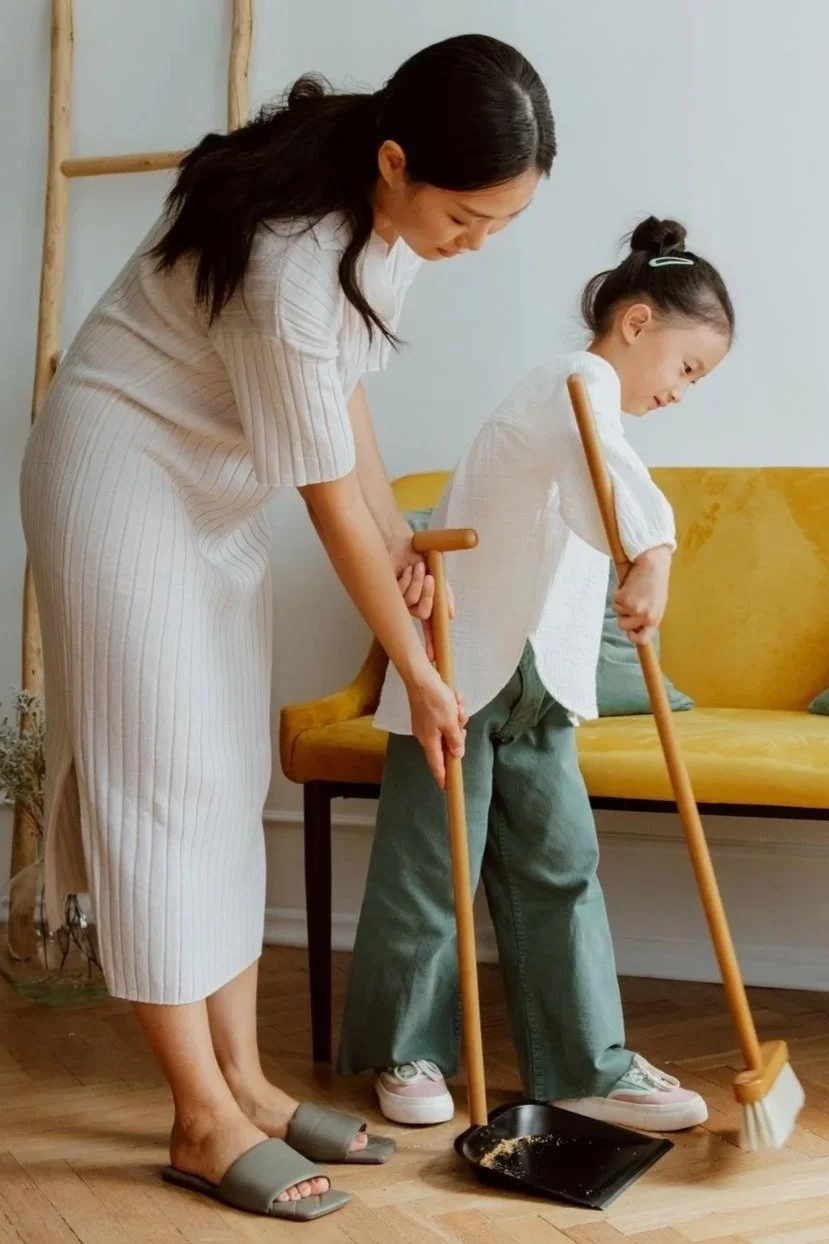
Birth order and personality do most of the sorting. If you were the oldest, you were the first one able to help, which made the hero or the caretaker a likely fit. If you were sensitive or outspoken, you were more likely to get the blame, and if you were younger, you took whatever was left.
Several factors decide it:
Your position in the birth order, since the oldest is typically the first one old enough to help.
Your personality, since being easygoing and being outspoken get very different reactions.
The circumstances around your birth, such as a job loss or the most difficult years of a marriage.
The roles your siblings already hold, because families rarely keep two heroes.
The person you remind your parents of, including a relative they've struggled with.
One large study looked at a related question, which is who parents tend to favor. A 2025 meta-analysis in Psychological Bulletin, which covered 19,469 participants across all of its analyses, found that parents tended to favor children who were more conscientious and agreeable. Parents also tended to give older siblings more freedom.
The effects were small, and the study was about favored treatment, so we're careful about applying it to family roles. The authors suggest that some children may be easier to parent, which may shape how they're treated.
Our post on birth order theory explains more about what your position in the family shapes and what it leaves alone.
Clients we work with in Hoboken often describe growing up in the same house as a sibling and having two completely different childhoods. Both experiences are accurate, because each of you was raised in a different position with a different job to do.
If you were an only child, you may have held several roles at once. With no sibling to share the responsibility, you may have been the hero at school and the caretaker at home.
How Your Role Follows You Into Adulthood
A role you practiced every day for eighteen years comes with you when you move out. You bring it to work and into your relationships, mostly without noticing. Four of the five roles are also easy to overlook, because they look like strengths from the outside.
The role lasts because it worked, keeping you connected to your family and keeping the peace until it became your automatic way of staying safe. You still reach for it in situations that only remind you of home.
Your childhood role can show up in your life now in ways like these:
You accept extra work because being needed feels safer than being ordinary.
You apologize first in every argument, even when you did nothing wrong.
You stay silent in meetings and then feel overlooked.
You make a joke when your partner tries to begin a serious conversation.
You choose partners or friends who require a great deal of attention.
Holidays tend to bring the role out fastest, because you can feel confident everywhere else and still feel fourteen at your parents' kitchen table.
The Hero
You learned early that achievement kept the household calm. Today you may have an impressive career and still feel guilty whenever you rest. A small mistake at work can feel enormous, because performing well was how you kept your place in the family.
If you were the hero, burnout or anxiety may be what finally brings you to therapy, and it can be a surprise when the conversation turns to your family. A useful question to consider is who you'd be on a day when you accomplished nothing.
The Scapegoat
You took the blame at home, even for problems that had little to do with you. Today you may brace for criticism before anyone has said a word, or assume you're the problem when something goes wrong at work.
In the Family Journal surveys mentioned earlier, this was the other role associated with more depressive symptoms. A good first step is noticing the moment you take the blame for something that wasn't yours, and pausing before you apologize.
The Lost Child
You stayed out of the way so that nobody had one more thing to worry about. You may have seen this described online as lost child syndrome, an informal name for the role.
Saying what you want may still be difficult, even about small decisions like where to eat. Being noticed can feel uncomfortable, and asking for help can feel worse. In the Family Journal surveys mentioned earlier, this was one of the two roles associated with more depressive symptoms.
A good first step is stating one preference out loud every day, even a minor one.
The Mascot
You were the funny one, and your jokes had a job to do. You may still reach for humor the moment a conversation becomes tense. Friends might say they love your easygoing nature and also that they rarely know how you're doing.
Staying with sadness, whether it's yours or someone else's, can feel nearly impossible without a joke to interrupt it. Try letting one heavy moment pass this week without lightening it, and pay attention to what comes up.
The Caretaker
You looked after a parent's moods or your younger siblings, and sometimes the entire household. These days, you're probably the friend everyone calls during a crisis and the partner who handles every responsibility, which makes resting while someone else is struggling feel wrong.
When you take over a parent's responsibilities as a child, therapists call it parentification. Our post on what parentification is and the signs you grew up too fast covers it in detail.
Can Your Role Change Over Time?
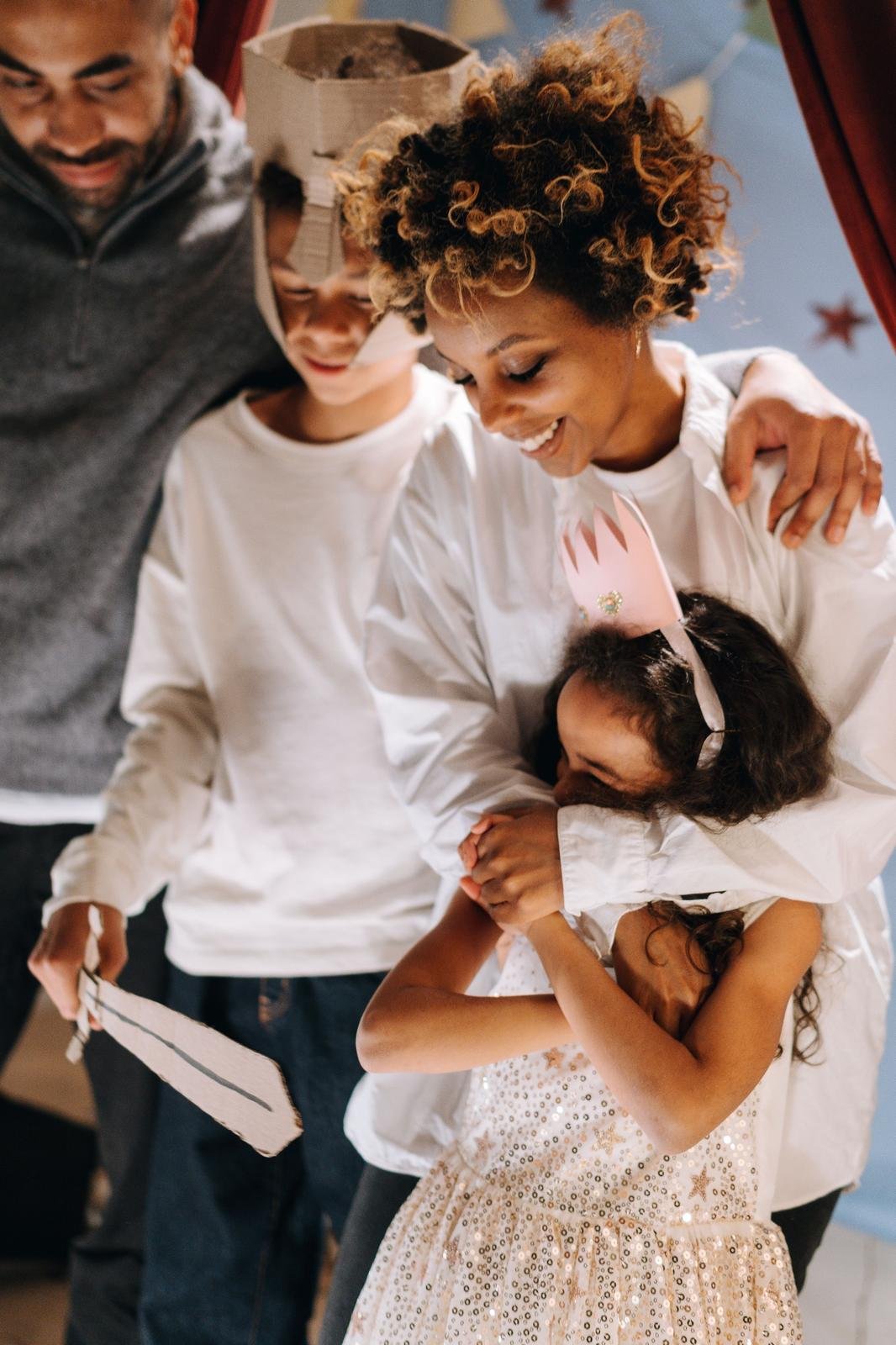
Yes. Your role can shift when your family shifts, such as when a sibling moves out or a parent gets sober. You can also hold two roles at once, or be the hero to one parent and the scapegoat to the other. The pull to slide back into your original role is the part that takes deliberate effort to change.
This explains why your family can look so different after one of you leaves. If you were the scapegoat and you move across the country, the blame can land on a sibling. If you were the caretaker and you stop, the household can feel like it's falling apart, because you were holding up more than anyone admitted.
It also explains why you and a sibling can remember the same years so differently, since your role may have changed at twelve when your parents divorced while your brother's stayed the same.
Your role also tends to find its match in your relationships. As a caretaker, you may end up with a partner who needs a great deal of care, and as a hero, you can land in a job that rewards never saying no. The setup feels comfortable because you already know your lines.
Stepping Out of Your Role With Family Counseling in Hoboken, NJ
Stepping out of a role begins with seeing it clearly, and that takes effort when the role has always felt like your personality.
A few places to begin:
Describe the job your role performed for the family in a single sentence.
Notice where you still perform that job, both at work and with friends.
Choose one small moment to respond differently, such as letting a call go to voicemail.
Expect your family to resist, because your change asks them to change as well.
Allow yourself to feel sad about what the role cost you.
In our clinical experience, the hardest part of leaving a role is the guilt that shows up right after you act out of character. If you were the caretaker, staying out of a problem feels selfish, and if you were the hero, taking a day off feels lazy.
That guilt is a sign the old rule is still running, and it usually fades with practice, especially once you understand where the rule came from.
Your family may push back harder for a while once you start responding differently. A relative might call you selfish, or the household might become more chaotic before it settles. Expect this stage, because it's a sign the change is registering.
A role label is most useful as a description of a job you performed in your family. It tells us where to look, and the work begins with your own history.
You can work on this without your entire family in the room. Individual sessions are a common place to begin, and the first few can focus on mapping out who played which role and why.
When relatives are willing to participate, family counseling at Anchor Therapy gives everyone a chance to see the pattern together. Your parents get to hear how early you noticed the tension, and you and your siblings get to compare notes on who each of you thought had it easier.
A useful exercise is slowing down one familiar moment, like the argument that happens every Thanksgiving, and looking at what each of you does to keep it going. Once your family can see the pattern, each of you has more room to try something different.
You're Allowed to Be More Than One Thing
Dysfunctional family roles are an intelligent response to a difficult childhood that can harden into the only way you're allowed to be. Understanding how yours developed is the first step toward deciding which parts of it you want to keep.
If you'd like help sorting through your family role, fill out the contact form below and our intake coordinator will get back to you. Anchor Therapy offers counseling in-person in Hoboken, NJ, and virtually in New Jersey, New York, and Florida. You can also visit our Meet Our Team page to find a therapist who feels like a good fit.

Victoria Scala, LAC
is the Psychotherapist, Community Engagement Director, Office Manager, and Social Media Manager at Anchor Therapy in Hoboken, New Jersey.
IF YOU’RE LOOKING FOR HELP FROM A PROFESSIONAL COUNSELOR TO ASSIST YOU IN MAKING POSITIVE CHANGES IN YOUR LIFE, CONTACT US
WORKING WITH US IS EASY
Fill out the contact form below.
Our intake coordinator will get back to you with more information on how we can help and to schedule an appointment. We will set you up with an experienced licensed therapist who specializes in what you're seeking help with and who understands your needs.
You’ll rest easy tonight knowing you made the first step to improve your life.
Having trouble with this form? Email us directly at info@anchortherapy.org with the information in the form.



Maybe you're the one who gets blamed no matter what actually happened, at home, at work, or even with friends. Something goes wrong, and somehow it lands on you. If that sounds familiar, there's a word for what's happening: scapegoat. A scapegoat is a person who's unfairly blamed for problems they didn't cause. Scapegoating shows up most in families, where it's often called being the family scapegoat.