
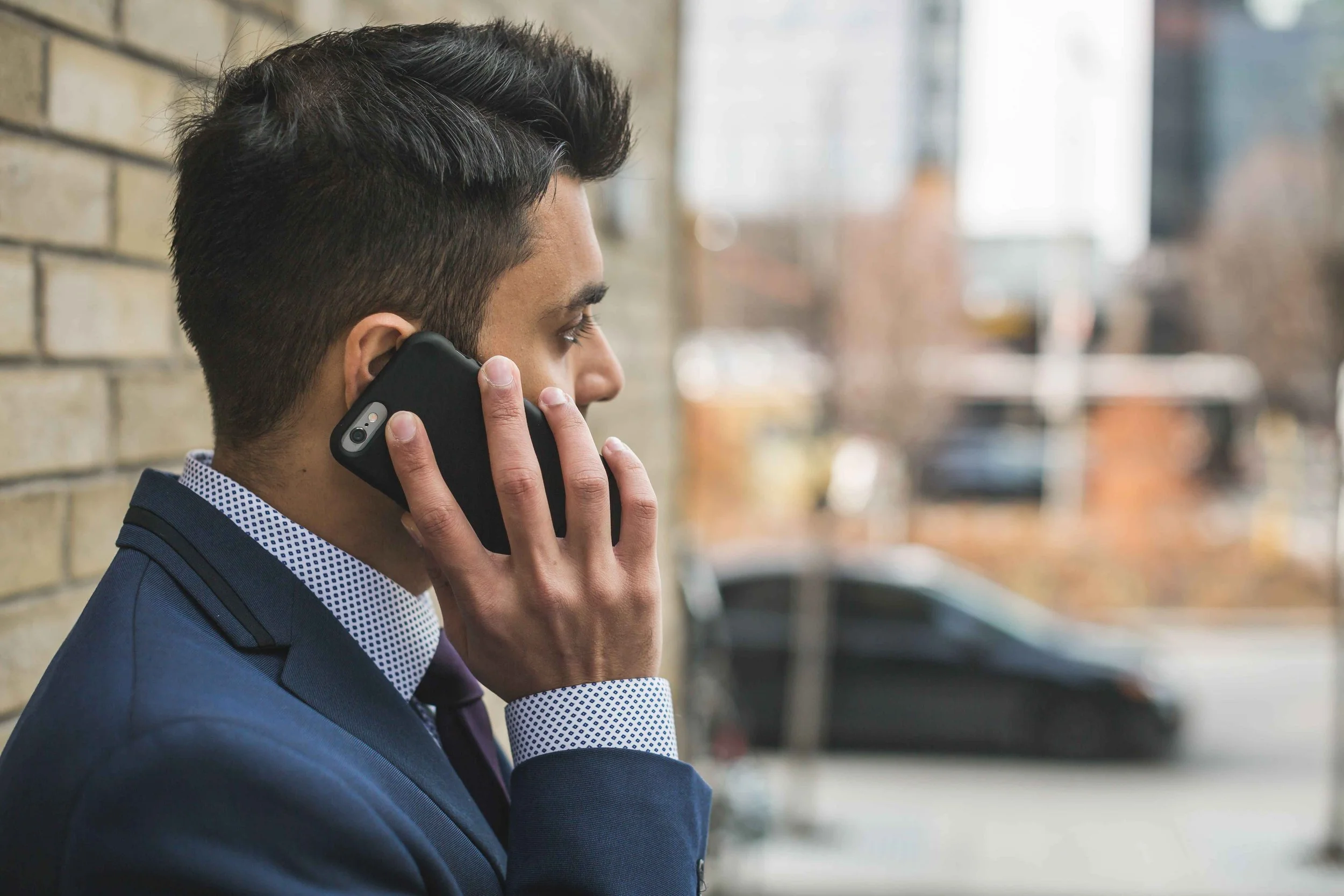
Your phone lights up with a number you don’t recognize, and your stomach drops. Maybe it’s your doctor’s office, maybe it’s a delivery driver, maybe it’s nothing important at all. Instead of picking up, you let it ring out and promise yourself you’ll deal with it later. Staring at a ringing phone with a racing heart, or putting off a simple call for days, is more common than you’d think, and you’re not alone in it.
That feeling has a name. Phone call anxiety, sometimes called telephobia, is the fear or dread of making or receiving phone calls. It can range from mild discomfort before a call to full panic the moment the phone rings. In this blog, you’ll learn what phone call anxiety is, why your brain treats a simple call like a threat, what keeps the fear going, and how therapy can help you feel calmer and more in control on the phone.
Anchor Therapy is a counseling center in Hoboken, NJ with mental health therapists specialized in helping children, teens, adults, couples, and families with anxiety, depression, relationship issues, trauma, life transitions, and more. Anchor Therapy is accepting new clients and is now providing in-person sessions and teletherapy sessions to residents of New Jersey, New York, and Florida.
What Is Phone Call Anxiety?
Phone call anxiety is the fear, dread, or avoidance that shows up around talking on the phone. Some people dread making calls, some dread answering them, and plenty of people dread both. The term telephobia gets used for the more intense end of this where the fear is strong enough to interfere with work, relationships, or everyday tasks like booking an appointment.
It helps to know this isn’t rare. A 2024 study published in the Journal of Family Medicine and Primary Care found that about 42% of medical students showed some level of telephobia, with roughly 9% reporting moderate to severe symptoms. Phone anxiety is one of those struggles people rarely say out loud, which can make it feel more isolating than it really is.
It also shows up across age groups. Research and surveys point to phone anxiety being especially common among younger adults who grew up texting, since a live call can feel like an unfamiliar, high-pressure way to communicate. Whatever your age, the discomfort is valid.
Phone call anxiety isn’t a formal diagnosis on its own. More often it’s a specific situation that triggers anxiety, and it overlaps a lot with social anxiety. The phone strips away much of what makes conversation feel safe, so for an already anxious brain, a call can feel like walking on stage with no script.
Why Do Phone Calls Make Me So Anxious?
Phone calls feel anxious because they happen in real time with no body language to read which leaves your brain guessing about how the other person’s reacting. There’s pressure to respond instantly, no chance to edit what you say, and often a fear of being judged. For an anxious mind, that uncertainty feels threatening.
A few specific things tend to drive phone call anxiety:
No visual cues. You can’t see the other person’s face, so you can’t tell if they’re smiling, annoyed, or just thinking. Your brain fills that silence with worst-case guesses.
Real-time pressure. Unlike a text, a call gives you no time to plan, rewrite, or step away. You’ve got to think and respond on the spot.
The ring itself. For some people, the sound of the phone ringing is its own trigger, setting off dread before they even know who’s calling.
Fear of judgment. Many people worry they’ll sound awkward, stumble over words, or freeze and have nothing to say.
A hard past call. Sometimes one difficult call, like getting upsetting news, makes every call afterward feel loaded.
Put all of that together, and it makes sense that your body reacts. The fear doesn’t mean something’s wrong with you. Your nervous system is just doing its job, in a situation that doesn’t truly call for alarm.
Common Signs and Symptoms of Phone Anxiety
Phone anxiety shows up in the body and in behavior, and it looks a lot like general anxiety. You might notice physical symptoms in the minutes before a call, or catch yourself going to great lengths to dodge the phone entirely.
Physical and emotional symptoms can include:
A racing heart or tight chest
Sweaty palms or shaky hands
Nausea or a knot in your stomach
Your mind going blank or racing with worry
Feeling panicky, full of dread, or on edge
Behavioral signs often look like:
Letting calls go to voicemail every time
Rehearsing or scripting what you’ll say beforehand
Putting off important calls for days or weeks
Asking someone else to make a call for you
Always choosing text or email, even when a call would be faster
At Anchor Therapy, we often see clients who’ve quietly built their whole routine around dodging the phone, like only ordering food through apps or skipping the doctor because booking means calling. They’re usually relieved to learn this is a known pattern with a name, and that it responds well to treatment.
Phone anxiety also tends to move in three waves: the anticipation beforehand, the call itself, and the aftermath where you replay everything you said. The anticipation has you imagining the call going badly, sometimes for hours. The call itself brings the racing heart and the scramble for words. For a lot of people, the before and after are actually worse than the call.

Is Phone Call Anxiety a Sign of Social Anxiety?
Not always, but the two are closely linked. Phone call anxiety is often a feature of social anxiety, since both center on a fear of being judged or scrutinized by others. You can have phone anxiety on its own, though. For many people, the phone’s simply the one social situation that feels hardest to face.
Social anxiety disorder is marked by strong fear or anxiety about situations where you might be judged or scrutinized, and people often avoid those situations or push through them with real discomfort, according to the National Institute of Mental Health. A phone call ticks all of those boxes. You’re being evaluated in the moment, you can’t control how it goes, and there’s no easy exit.
That said, phone anxiety can also stand alone, or pair with things like ADHD, depression, or a history of stressful calls. When it’s part of a broader pattern of social fear, treating the social anxiety underneath tends to ease the phone piece too. Our social anxiety therapists work with clients on exactly this kind of overlap.
Why Avoiding Calls Makes It Worse
Avoiding a call works in the short term. The moment you decide not to pick up, your anxiety drops, and your brain quietly learns that dodging the phone makes you feel better. That relief is real, and it’s exactly what makes avoidance so hard to break.
The problem is what avoidance teaches your brain over time. Every skipped call sends the message that phone calls really are dangerous, so the fear grows instead of fading. As the NIMH notes, avoiding situations that cause anxiety can feel helpful at first, but the anxiety usually sticks around without treatment.
Here’s the part worth sitting with. The hardest part of phone anxiety usually isn’t the call itself, which is often over in two minutes. It’s the hours of dread beforehand, and avoidance feeds that dread rather than ending it.
This is why “just push through it” rarely works on its own. Pushing through without a plan can flood you with so much anxiety that the call becomes proof the fear was right. What helps is facing calls gradually, in a way your nervous system can actually handle.
How to Overcome Phone Call Anxiety
You don’t have to love phone calls to stop fearing them. The realistic goal is to get the anxiety down to a level where a call feels annoying at worst, rather than terrifying. You can get there without ever becoming someone who happily chats on the phone for an hour.
These strategies can help you start:
Build a phone ladder. List calls from easiest to hardest, then work your way up. You might start with a friend who always picks up, then a coffee shop to ask their hours, then move toward the calls that scare you more.
Start with outgoing calls. Calls you choose to make are easier than ones that catch you off guard, so build your confidence there before tackling the ones you answer.
Prep, but don’t over-script. Jot a few bullet points before an important call so you’re not starting cold. Skip the word-for-word script since reading it can make you sound stiff and crank up the pressure.
Practice the first ten seconds. A lot of anxiety lives in the opening. Rehearse a simple greeting out loud so the start feels automatic.
Slow your breathing first. Take a few slow breaths before you dial. That calms your body enough to think clearly.
Pick your moment. Make the call when you've got a few quiet minutes and some privacy, not while you're rushing out the door. That breathing room takes some of the pressure off.
Let yourself be human. You’re allowed to pause, say “let me think for a second,” or ask someone to repeat themselves. Real conversations have these moments.
In our clinical experience, the piece that moves the needle most is repetition, not willpower. Clients who make a few low-stakes calls each week, on purpose, usually find the dread shrinking within a month or two, long before they feel ready.

How Therapy Helps With Phone Call Anxiety
When phone anxiety starts interfering with your life, therapy can help you change your relationship with the phone for good. A therapist gives you structure, support, and a plan, so you’re not white-knuckling it alone.
A few evidence-based approaches work especially well:
Cognitive Behavioral Therapy (CBT). CBT helps you catch the anxious thoughts that fire before a call, like “I’ll sound stupid,” and test whether they’re actually true. Over time, you swap them for more realistic ones.
Exposure therapy. Exposure counseling is the gradual phone ladder done with professional support. Your therapist helps you face calls step by step, at a pace you can handle, until your brain learns they’re safe.
Skills and relaxation work. You’ll practice grounding and breathing tools you can use in the moment, plus communication skills that make calls feel more manageable.
A first session usually starts with figuring out which calls scare you most, and what tends to happen in your body when the phone rings. From there, you and your therapist build a plan that goes at your pace, so each step feels challenging but doable rather than overwhelming.
Phone anxiety’s very treatable, and most people see real change without years of work. For a related pattern, our blog on communication anxiety and the fear of confrontation covers the dread of hard conversations, and our piece on talking to people when you have social anxiety makes for a helpful read. A lot of our clients feel phone dread most at work which we get into in our post on work-related anxiety.
If you’re looking to learn more and for additional support, our anxiety counseling services are a good place to start.
Do I Need Therapy for Phone Anxiety?
Therapy’s worth considering once phone anxiety starts affecting your job, your relationships, or your health, like avoiding calls that matter or skipping appointments because booking means dialing. Constant or growing dread is a strong signal to get support. Mild, occasional nerves usually don’t need treatment.
There’s no threshold you have to hit to deserve help. Phone calls taking up more space in your head than they should is reason enough to talk to someone. Therapy can be the difference between organizing your life around dodging the phone and just picking it up when you need to.
Moving Forward With Phone Call Anxiety
Phone call anxiety is more common than most people realize, and it makes sense once you see how much the phone strips away. The fear grows when you avoid calls and shrinks when you face them gradually, with the right support. You can absolutely get to a place where a ringing phone doesn’t wreck your day.
Struggling with phone call anxiety? Reaching out to a therapist can help. The team at Anchor Therapy works with clients in person in Hoboken, NJ, and virtually across New Jersey, New York, and Florida. You can meet our therapists on our Meet Our Team page, or get in touch through the intake form below.

Victoria Scala
is the Community Engagement Director, Office Manager, and Social Media Manager at Anchor Therapy in Hoboken, New Jersey. She is a graduate of the Honors College of Rutgers University-Newark and is currently studying Clinical Mental Health Counseling at the graduate level.
IF YOU’RE LOOKING FOR HELP FROM A PROFESSIONAL COUNSELOR TO ASSIST YOU IN MAKING POSITIVE CHANGES IN YOUR LIFE, CONTACT US
WORKING WITH US IS EASY
Fill out the contact form below.
Our intake coordinator will get back to you with more information on how we can help and to schedule an appointment. We will set you up with an experienced licensed therapist who specializes in what you're seeking help with and who understands your needs.
You’ll rest easy tonight knowing you made the first step to improve your life.
Having trouble with this form? Email us directly at info@anchortherapy.org with the information in the form.



Maybe you're the one who gets blamed no matter what actually happened, at home, at work, or even with friends. Something goes wrong, and somehow it lands on you. If that sounds familiar, there's a word for what's happening: scapegoat. A scapegoat is a person who's unfairly blamed for problems they didn't cause. Scapegoating shows up most in families, where it's often called being the family scapegoat.