
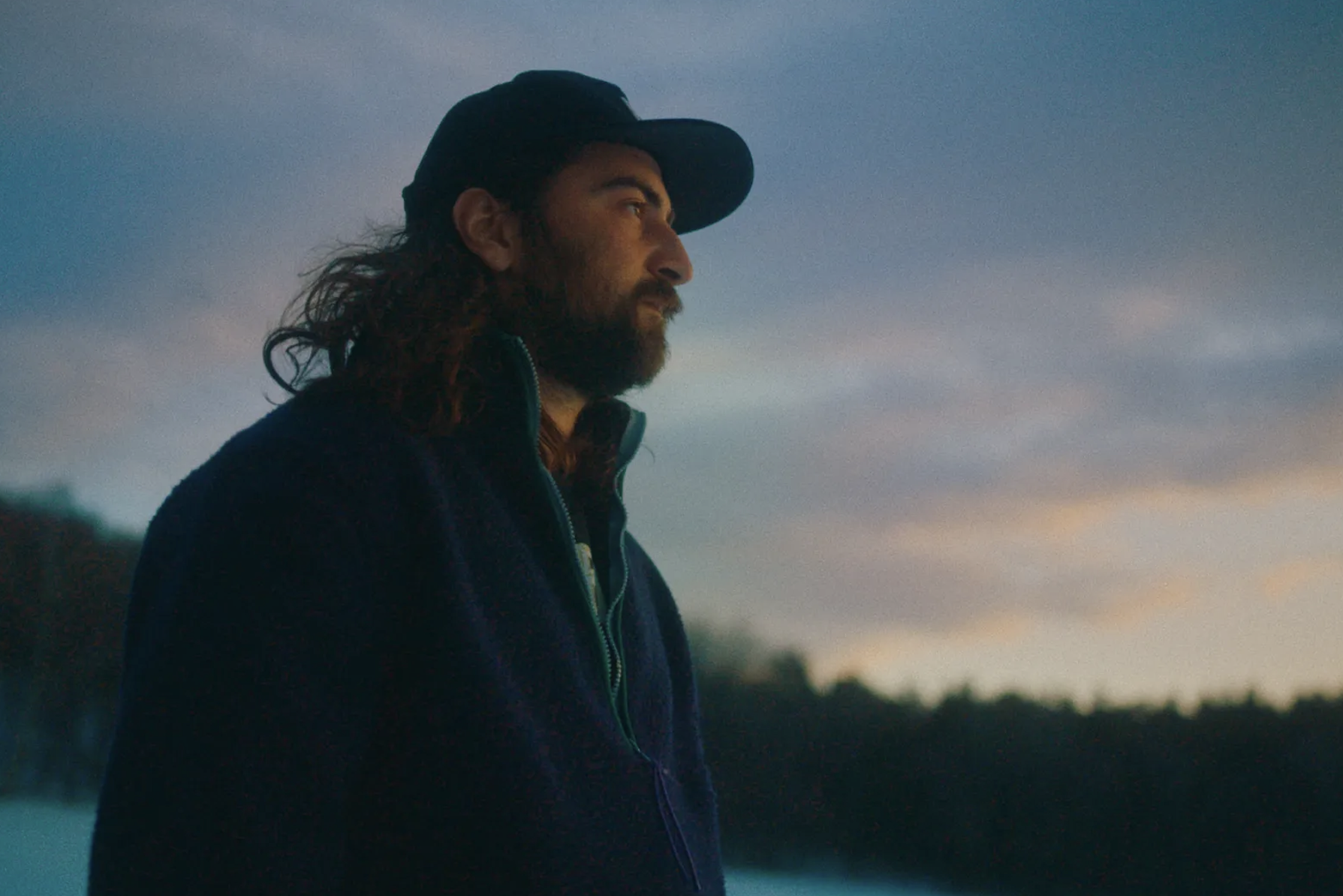
Image: Netflix
Out of Body is a Netflix documentary that follows Noah Kahan for about a year, and it's the first time he's talked publicly about his OCD diagnosis and years of body dysmorphia. Fans expected tour footage and Vermont scenery. What they got was a look at two things he'd kept almost entirely private. If you've been searching for what he actually said, this post walks through it.
The idea underneath the whole film is simple and uncomfortable. Getting everything you wanted doesn't fix what's going on in your head. You don't have to be a Noah Kahan fan to know that feeling, because success arriving while an old struggle stays exactly the same size shows up at work, at school, and in ordinary families too. Below, we cover what he shared, why his OCD looks nothing like the stereotype, and how body dysmorphia fits into it.
Anchor Therapy is a counseling center in Hoboken, NJ with mental health therapists specialized in helping children, teens, adults, couples, and families with anxiety, depression, relationship issues, trauma, life transitions, and more. Anchor Therapy is accepting new clients and is now providing in-person sessions and teletherapy sessions to residents of New Jersey, New York, and Florida.
What Is Noah Kahan's Documentary About?
Out of Body follows Kahan over about a year, starting right as Stick Season turned him into a global name. The film shows sold-out tours and huge career wins. Right next to that, it shows someone truly struggling underneath all of it, in ways his music alone never fully captured or explained.
Director Nick Sweeney didn't set out to make a typical music documentary. He wanted to catch Kahan being open, even in the messy parts. That openness is exactly why the film landed the way it did with viewers and critics.
By the end, Kahan is back in Vermont, working on new music and trying to feel like himself again. The film doesn't wrap things up neatly. It just shows the process which is part of why it feels so true to life.
Critics have picked up on this too. Several reviews noted the film refuses to just be a highlight reel or a piece of promotion for his music. It shows the cost of fame alongside the reward, which is rare for a documentary about a musician still early in a huge career moment.
Kahan himself has described filming as strange and difficult, but ultimately worth it. He's said the finished film captures more of his personal life than he expected the world would ever see, including moments with his family back in Vermont.
The film hit Netflix on April 13, 2026, and his fourth album, The Great Divide, followed on April 24. He wrote most of that record during the same stretch the documentary covers, which is part of why the two land as one story instead of two separate releases.
What Made Noah Kahan Realize He Had OCD?
Kahan realized he had OCD after a hard episode of intrusive thoughts during a trip to Joshua Tree in 2025. He was 28 at the time. What was supposed to be a quiet creative retreat turned into something much heavier, and it pushed him toward an actual diagnosis he'd needed for years.
He's said the diagnosis reframed his whole childhood. Rituals he'd had for years, ones he never had a name for, suddenly made sense once he understood what he was actually dealing with. As he put it, "it was this real insidious disorder." A simple label changed everything for him.
At Anchor Therapy, we often see this exact moment with clients. One hard episode finally explains a pattern that's been there the whole time, sometimes since childhood, just never named until now.
That delay is common, and it's not really anyone's fault. OCD doesn't always announce itself clearly, especially when it shows up mostly as thought patterns instead of visible behavior a parent or teacher might catch early. Someone can love you and still have no idea it's there.
Kahan has also said he'd started medication for anxiety back in high school, years before the OCD diagnosis. Looking back, some of what he'd labeled as anxiety was actually part of the same underlying pattern the whole time.

Noah Kahan's OCD Looks Nothing Like the Stereotype
Most people picture OCD as hand-washing or triple-checking a locked door. Kahan's version looks almost nothing like that. His OCD shows up mostly as intrusive thoughts, not visible rituals, which is exactly why it took him so long to get a real diagnosis.
This form is sometimes called Pure O, short for purely obsessional. The compulsions still happen, but they're mental. Replaying a thought. Silently arguing with it.
Trying to reason your way out of it, over and over again, sometimes for hours at a stretch. None of that is visible from the outside.
It's easy to miss, even for the person living with it, because there's no obvious behavior for anyone else to notice or name. A partner or parent can sit in the same room for years and never see it happening.
Government health data backs up how common OCD actually is, even though it's still widely misunderstood. Roughly 1 in 100 adults have OCD in a given year, and more than half of those adults report serious impairment from it. So OCD itself is common. Hearing someone describe it out loud and on camera, the way Kahan did, is the rare part.
Noah Kahan Documentary Out of Body and the Body Image He Kept Hidden
The Noah Kahan documentary also gets into something Kahan had barely spoken about before: body dysmorphia. He's described battling it silently for fifteen years, saying he's "wasted so much time hating who I am."
That silence is common with body dysmorphia. Research on the condition consistently finds that most people don't bring it up unless a clinician asks them directly. Many stay quiet out of pure embarrassment, even when the condition is seriously affecting their daily life.
It's a disorder that hides extremely well, even from people who are close to the person living with it. Kahan has said even his own mother didn't fully grasp how much it was affecting him until she watched the documentary.
That's a striking detail worth sitting with. Body dysmorphia can run for years right next to people who love you, completely undetected the entire time. It hides in plain sight, even from the people closest to it.
Body dysmorphia is a preoccupation with a perceived flaw in appearance, one that's often invisible or minor to everyone else. The distress it causes is very real, even when the flaw itself is barely noticeable, or not there at all. The pain is real even when the mirror lies.
People with body dysmorphia often check mirrors obsessively, or avoid them completely. Some seek constant reassurance about how they look. Others simply carry the belief quietly, the way Kahan did for fifteen years, without ever saying it out loud to the people around them. Our blog on the hidden impact of body image on your well-being goes further into how those patterns show up day to day.
Why Do OCD and Body Dysmorphia Often Get Missed?
OCD and body dysmorphia get missed for a similar reason. Neither one has to look the way people expect it to. Someone can meet every clinical marker for OCD without a single visible compulsion, and someone can be consumed by body dysmorphia while looking completely fine from the outside. Neither condition needs an audience to be real.
Both conditions are also frequently confused with something milder. A person might get told they're just a perfectionist, or just vain, or just stressed. Those labels feel smaller and safer, which is part of why they stick even when they're wrong.
A few common reasons:
The person often doesn't have language for what's happening, so it gets labeled as "just anxiety" or "just being a perfectionist"
Shame keeps people from bringing it up, even with a therapist, unless they're asked directly about it
Family and friends often don't see it, since so much of both conditions plays out entirely in someone's head
Success or achievement can mask it further, since it's easy to assume someone thriving outwardly must be fine on the inside too
Public figures rarely talk about it openly, so there's little cultural language for what these conditions actually feel like day to day

Success Doesn't Cancel Out What's Underneath
Kahan has said plainly that fame didn't fix his mental health. If anything, it gave his existing struggles a bigger stage to play out on. That cuts against an assumption a lot of people carry around without ever questioning it.
The assumption goes like this: enough success eventually solves whatever is wrong underneath. From a clinical standpoint, that gets things backward. Achievement can add new pressure on top of an existing condition. It doesn't replace it or make it disappear.
OCD and body dysmorphia don't check someone's resume before deciding whether to show up. A sold-out tour and a serious mental health condition can exist in the exact same week, the exact same body.
This matters beyond Kahan's specific story. It's a pattern worth remembering any time someone assumes a visibly successful person must have it all figured out on the inside too. Looking fine and feeling fine are not the same thing, and they never have been.
Why Watching Someone Else Open Up Helps
There's real value in watching someone with Kahan's platform describe intrusive thoughts. Or admit to hating how he looks, despite being conventionally successful and attractive by any public standard you'd care to name. It gives people permission to recognize the same pattern in themselves, without so much shame attached to it, and without waiting fifteen years to say so.
At Anchor Therapy, we often hear a version of the same thing after someone sees a public figure open up like this: "I thought it was just me." It's never just one person. These conditions are common, treatable, and a lot more ordinary than the stigma around them suggests.
Representation matters here in a very practical way. Seeing someone talk plainly about intrusive thoughts or body image struggles makes it easier for the next person to use the same words for their own experience, instead of staying quiet about it for years the way Kahan did.
That's a big part of why this documentary landed the way it did. It gave a shared language to something a lot of people carry alone, often for a long time before anyone finds out.
How Do You Get Help for OCD or Body Dysmorphia?
Getting help for OCD or body dysmorphia starts with naming what's actually happening. Ideally, that happens with a therapist who treats these conditions specifically, since both respond well to targeted approaches like Exposure and Response Prevention (ERP) and Cognitive Behavioral Therapy (CBT).
A few places to start:
Look for a therapist who lists OCD or body dysmorphia as a specialty, not just general anxiety
Be ready to describe the mental side of the pattern, not just visible behaviors, since so much of it lives internally
Give treatment real time. Exposure-based work is effective, but it asks a lot up front before it gets easier
Bring up shame directly with your therapist, even the parts that feel embarrassing to say out loud, since that's often where the most useful work happens
Our blog on Pure O OCD digs deeper into what intrusive-thought-based OCD looks like day to day, and how it differs from the hand-washing stereotype most people picture. Our guide to managing OCD intrusive thoughts with CBT covers the practical side of what treatment actually looks like.
Kahan has talked about therapy and medication as part of what's helped him. That combination is common and there's nothing weak about it. For OCD and body dysmorphia, medication alongside therapy is often what effective treatment actually looks like.
He's also said he worried treatment might dull his creativity, and held off getting help for a long time because of that fear. He's since said the opposite turned out to be true. Getting real support gave him more room to create, not less, once he actually let himself receive it.
Noah Kahan's documentary works because it refuses to be a highlight reel. It shows a successful person still working through intrusive thoughts and body image struggles that had nothing to do with how many tickets he sold.
A packed tour schedule and a real mental health condition can sit right next to each other, and neither one cancels the other out.
If any part of his story sounds familiar, that recognition is worth paying attention to. Anchor Therapy offers individual and family therapy to residents of New Jersey, New York, and Florida, both in person in Hoboken and virtually. You can learn more about our practice on our homepage, or find the right fit for you on our Meet the Therapists page. When you're ready, fill out the intake form below and we'll take it from there.

Victoria Scala
is the Community Engagement Director, Office Manager, and Social Media Manager at Anchor Therapy in Hoboken, New Jersey. She is a graduate of the Honors College of Rutgers University-Newark and is currently studying Clinical Mental Health Counseling at the graduate level.
IF YOU’RE LOOKING FOR HELP FROM A PROFESSIONAL COUNSELOR TO ASSIST YOU IN MAKING POSITIVE CHANGES IN YOUR LIFE, CONTACT US
WORKING WITH US IS EASY
Fill out the contact form below.
Our intake coordinator will get back to you with more information on how we can help and to schedule an appointment. We will set you up with an experienced licensed therapist who specializes in what you're seeking help with and who understands your needs.
You’ll rest easy tonight knowing you made the first step to improve your life.
Having trouble with this form? Email us directly at info@anchortherapy.org with the information in the form.



Maybe you're the one who gets blamed no matter what actually happened, at home, at work, or even with friends. Something goes wrong, and somehow it lands on you. If that sounds familiar, there's a word for what's happening: scapegoat. A scapegoat is a person who's unfairly blamed for problems they didn't cause. Scapegoating shows up most in families, where it's often called being the family scapegoat.