
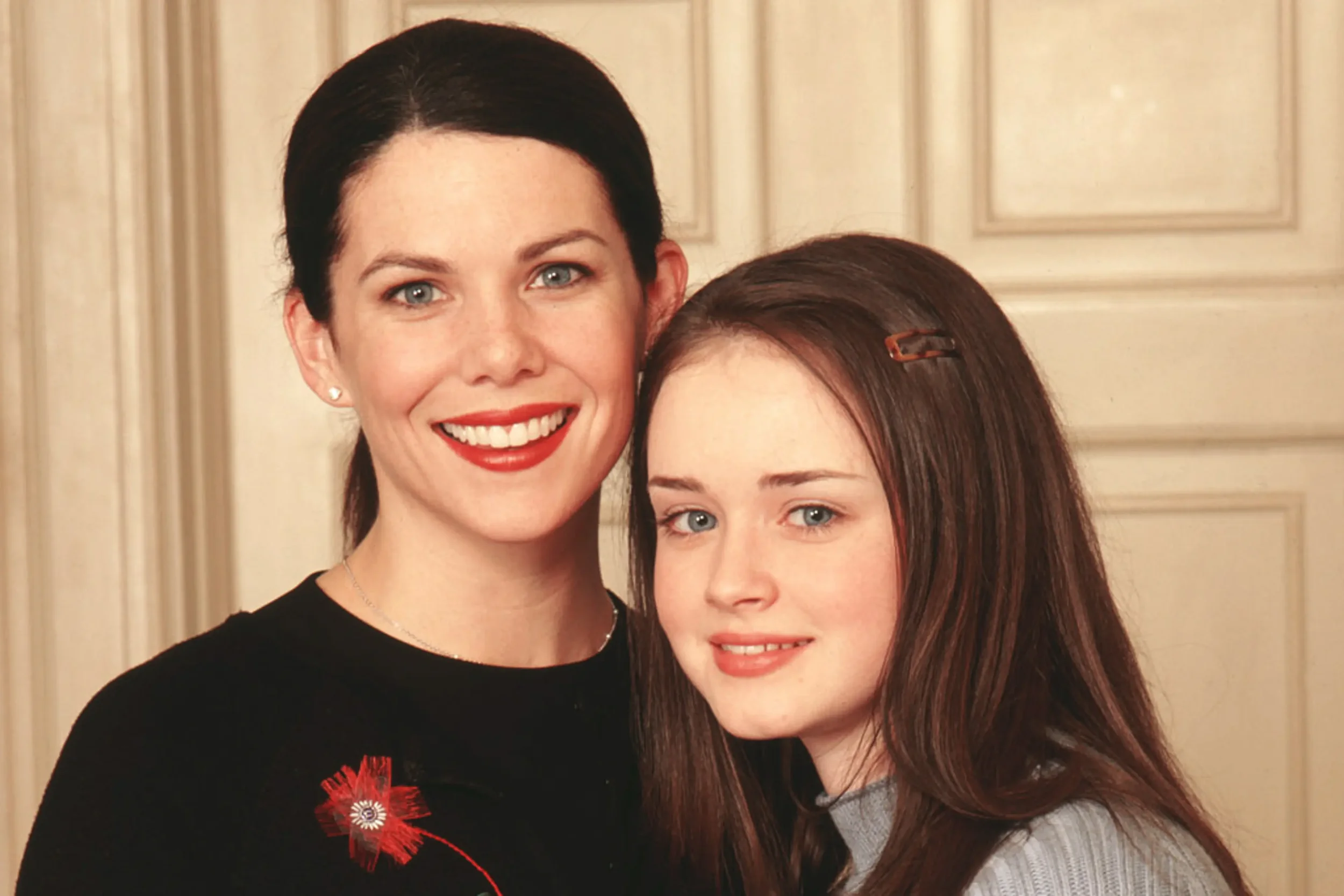
Image: Warner Bros. Television
It's Sunday night, you're three episodes into your fourth rewatch of Gilmore Girls, and your phone lights up with a text from your mom. "Did you get my voicemail? Call me back when you can." You love her, and you also put the phone face down and press play, because Lorelai and Rory are bantering over coffee at Luke's and that version of a mother-daughter relationship feels a lot easier.
The Lorelai and Rory relationship is the close, best-friend style bond between single mom Lorelai Gilmore and her daughter Rory in Gilmore Girls, shaped by Lorelai's tense history with her own mother, Emily. It's one of the most talked-about mother-daughter dynamics on TV because it's warm, funny, and complicated all at once. In this post, we'll look at what makes their bond so close, what the show gets right about mothers and daughters, where that closeness gets messy, and what it can teach you about your own relationship with your mom.
Anchor Therapy is a counseling center in Hoboken, NJ with mental health therapists specialized in helping children, teens, adults, couples, and families with anxiety, depression, relationship issues, trauma, life transitions, and more. Anchor Therapy is accepting new clients and is now providing in-person sessions and teletherapy sessions to residents of New Jersey, New York, and Florida.
What Makes the Lorelai and Rory Relationship So Close?
Lorelai had Rory at 16 and raised her mostly on her own, so the two of them grew up together. They share inside jokes, junk food, pop culture references, and nearly every detail of their lives. Lorelai built the home she wished she'd had, one where Rory could tell her anything without being judged or managed.
That backstory matters. After Rory was born, Lorelai lived with her parents in Hartford for a short time, then left for Stars Hollow. She took a job as a maid at the Independence Inn, and she and baby Rory lived in a converted potting shed behind it.
So when you meet them in the pilot, Lorelai is 32, Rory is 15, and their closeness is the center of both of their lives. Lorelai doesn't have a parenting model she wants to copy, so she makes one up as she goes. A lot of what she does is the opposite of how she was raised.
That's a big part of why the relationship might feel familiar to you. If you've ever promised yourself you'd parent differently than your own parents did, you've probably felt some of what Lorelai feels.
Lorelai and Emily and the Mother She Didn't Want to Become
You can't understand Lorelai and Rory without Lorelai and Emily. Emily Gilmore is formal, demanding, and deeply invested in appearances. She loves her daughter, and that love often comes out as criticism, control, and very high expectations.
For years after Lorelai left home, she had very little contact with her parents beyond major holidays. That changes in the pilot, when Rory gets into Chilton, an expensive prep school, and Lorelai has to ask her parents to help with the tuition. Emily agrees, on one condition: Lorelai and Rory have to come to dinner every Friday night.
Those Friday night dinners become the stage for the whole show. Emily gets access to her granddaughter, and Lorelai gets dragged back into the dynamic she ran away from at 16. Within a few minutes at the Gilmore dinner table, Lorelai the confident adult starts acting like Lorelai the frustrated teenager again.
That shift is one of the most realistic things about the show. You might notice it in yourself on holiday visits home, when an old role clicks back into place the moment you walk through the door. You can be a capable adult with your own life and still feel 15 again after one comment from your mom about your hair.
Is It Healthy to Be Best Friends With Your Mom?
It can be, especially once you're an adult. Trouble starts when the friendship replaces the parenting, so your mom leans on you for emotional support she should get from other adults. Healthy closeness leaves room for your own privacy, your own choices, and your mom acting like a parent when you need one.
Lorelai gets a lot right here. She's warm, she's fun, and Rory clearly feels safe with her. When it counts, she also acts like a parent, like when she pushes back on Rory's choices or holds a line Rory doesn't like.
Still, the show hints at the cost of being your mom's whole world. For much of the series, Lorelai's sense of stability is tied closely to how Rory is doing. When Rory makes a choice Lorelai doesn't agree with, Lorelai can take it as a personal blow.
At Anchor Therapy, we often see adult daughters who describe their mom as their best friend and also feel guilty every time they want some distance. Both of those things can be true. A relationship can be loving and still need clearer edges.

When Closeness Turns Into Enmeshment
Enmeshment is when the emotional boundary between you and your parent gets blurry, so it's hard to tell where one person's feelings end and the other's begin. In an enmeshed relationship, your mom's moods can feel like your job to manage, and your choices can feel like they belong to both of you.
Research takes this seriously. A 2024 meta-analysis in Psychological Bulletin pulled together 478 studies on what researchers call parent-child boundary dissolution. The authors described several patterns, including enmeshment and kids taking on a caregiving role for their parents. Every pattern was linked with emotional and behavioral difficulties in kids, and enmeshment had a stronger link than the caregiving pattern to internalizing problems, the kind kids turn inward, like anxiety and depression.
You can spot a few of these signs in Lorelai and Rory when you look closely:
Rory often weighs how Lorelai will feel before she makes her own decisions
Lorelai sometimes takes Rory's choices personally, as if they say something about her
Disagreements between them can feel like a betrayal
Rory has a hard time keeping anything from Lorelai, even when she might want to
If those patterns sound like your family, our post on dating someone with an enmeshed family walks through how enmeshment shows up in adult life.
Sometimes the roles flip completely, and you end up as your parent's emotional caretaker. Our post on what parentification is covers that pattern and how it can follow you into adulthood.
Why Did Rory and Lorelai Stop Talking?
Rory's decision to take time off from Yale split them. Newspaper owner Mitchum Huntzberger had told her she didn't have what it takes to be a journalist, and Rory's confidence fell apart. Lorelai was hurt and angry about the decision, and Rory moved in with Emily and Richard.
The two barely spoke for months.
During that stretch, Rory:
Worked with Emily's Daughters of the American Revolution chapter
Lived in her grandparents' pool house
Did community service after she and Logan stole a yacht
Lorelai was left watching her mother step in as Rory's support system.
Lorelai's reaction makes the most sense when you remember her own history. She left her parents' house so her daughter could grow up differently, and now her daughter was living in that same house, choosing Emily's world. For Lorelai, Rory's choice touched an old wound.
They finally reconcile midway through Season 6, in "The Prodigal Daughter Returns," when Rory decides to come home. When you're used to sharing everything with someone, one big disagreement can feel like losing them.
You might recognize this in your own family. In close mother-daughter relationships, a choice about school, a partner, or where you live can start to feel like a test of loyalty.
How Mother-Daughter Patterns Pass Down Through Generations
Gilmore Girls is a story about three generations of women trying not to repeat each other. Emily tried to give Lorelai a polished, protected life. Lorelai rejected that life and tried to give Rory freedom and friendship. Rory grew up with that freedom and sometimes didn't know what to do with it.
Each generation's choices are a response to the one before. Lorelai's whole parenting style is shaped by how much she resented Emily's control. Rory's struggles in her twenties, like her stalled career and her mixed feelings about her own decisions, echo a lot of Lorelai's early years.
The 2016 revival, A Year in the Life, makes this even clearer. Richard has died, and Emily and Lorelai are barely speaking after a painful moment at his funeral. They end up in therapy together, and the revival ends with Rory telling Lorelai she's pregnant, which puts her on a path that echoes her mother's.
Research on adult mother-daughter relationships backs up how intense this bond can be. A review of intergenerational relationships in Gerontology notes that mother-daughter pairs report stronger positive and negative emotional qualities in their relationships. So if you feel both deep love and deep frustration toward your mom, that mix fits what researchers see in mother-daughter relationships.
If your relationship with your mom has always felt like you had to earn her approval, our post on growing up with conditional love explains how that pattern forms and how it can affect your adult relationships.

What Gilmore Girls Mother-Daughter Moments Can Teach You
The Gilmores have a few lessons worth borrowing for your own relationship with your mom. Here's what we think the show gets right.
Closeness Needs Some Space
The healthiest version of a close mother-daughter relationship leaves room for each of you to have a private life. You can share a lot with your mom and still keep some things to yourself.
You Can Love Your Mom and Still Set Limits
Lorelai shows up to Friday night dinner every week, and she also pushes back when Emily crosses a line.
You can keep showing up for your mom while still deciding:
Which topics are off the table
How long a visit lasts
How often you talk
Repair Keeps a Relationship Strong
Lorelai and Rory have some big fights, and what keeps their relationship strong is that they come back to each other.
Repair might look like:
An apology
A hard conversation
Slowly rebuilding trust
Even Lorelai and Emily, after decades of tension, are still trying in the revival.
Your Mom's Story Shapes Her Reactions
A lot of Emily's behavior makes more sense once you see the pressure she grew up under, and Lorelai's makes more sense once you know her history with Emily. Understanding where your mom's reactions come from can help you take them a little less personally, even when they still hurt.
How Therapy Helps With Mother-Daughter Relationships
Therapy gives you a place to sort through a relationship that's too close to see clearly on your own. In individual therapy, you can look at the roles you learned growing up, notice when you slip back into them, and practice responding differently. You don't need your mom's participation to start changing your side of the pattern.
In our clinical experience, the hardest step is letting your mom be disappointed without rushing to fix it. Clients we work with in Hoboken often describe the guilt that comes up the first time they say no to a weekly call or a holiday plan. Learning to tolerate that guilt, without giving in and without cutting your mom off, is often where the relationship starts to shift.
Sometimes it helps to work on the relationship together. Our family counseling gives you and your mom a neutral space to talk through old hurts and practice new ways of communicating. It's the same step Emily and Lorelai take in the revival.
Therapy might help if:
You feel responsible for your mom's moods or happiness
You hide big parts of your life because you're afraid of her reaction
Every visit home leaves you feeling like a teenager again
You and your mom keep having the same fight
You want to be close to your mom but don't know how to set limits without hurting her
Our adult counseling team can help you work through family patterns like these, at whatever pace feels right for you.
Finding Your Own Version of Close
The Lorelai and Rory relationship resonates because it shows both the gifts and the strain of a very close mother-daughter bond. Gilmore Girls also shows how the way your mom was raised shapes the way she raises you. Understanding those patterns gives you more choice about which ones you keep.
If your relationship with your mom feels too close, too distant, or somewhere confusing in between, our therapists can help. We offer therapy in-person in Hoboken, NJ, and virtually in New Jersey, New York, and Florida, and you can get to know our therapists on our Meet Our Team page or learn more about Anchor Therapy. Fill out the intake form below, and our intake coordinator will get back to you to match you with the right therapist.

Victoria Scala, LAC
is the Psychotherapist, Community Engagement Director, Office Manager, and Social Media Manager at Anchor Therapy in Hoboken, New Jersey.
IF YOU’RE LOOKING FOR HELP FROM A PROFESSIONAL COUNSELOR TO ASSIST YOU IN MAKING POSITIVE CHANGES IN YOUR LIFE, CONTACT US
WORKING WITH US IS EASY
Fill out the contact form below.
Our intake coordinator will get back to you with more information on how we can help and to schedule an appointment. We will set you up with an experienced licensed therapist who specializes in what you're seeking help with and who understands your needs.
You’ll rest easy tonight knowing you made the first step to improve your life.
Having trouble with this form? Email us directly at info@anchortherapy.org with the information in the form.



You hit every deadline this week. You made it to Saturday’s soccer game, answered the late emails, and nobody at work would guess how many nights end with a bottle of wine you meant to stop halfway through. From the outside, life looks fine. So when the thought “Do I drink too much?” shows up, it’s easy to push it aside because you’re handling everything.
If you’ve typed “what is a high functioning alcoholic” into a search bar at 1 a.m., that question deserves a clear answer. A high functioning alcoholic is someone who meets the criteria for alcohol use disorder while still keeping up with work, family, and daily life. That’s why the drinking can stay hidden from the people around you, and often from yourself. Below, we’ll walk through the signs, why this pattern is so easy to miss, what tends to happen over time, and how therapy helps you or someone you love.