

If love in your home growing up always felt like something you had to earn, you already know how exhausting that is to carry. Maybe you learned early that affection came with conditions: be good enough, stay quiet enough, achieve enough, and you'd be okay. Step out of line, and the warmth disappeared.
Conditional love is when a parent's affection, approval, or emotional availability depends on a child meeting certain expectations rather than being offered freely and consistently. That kind of environment shapes you in ways that don't just stay in childhood.
Growing up with conditional love in a dysfunctional family system can affect how you see yourself, how you relate to others, and how you move through the world as an adult, often without realizing where those patterns came from. This blog will walk you through what conditional love actually looks like, how it affects adult relationships and self-worth, and what healing can look like with the right support.
Anchor Therapy is a counseling center in Hoboken, NJ with mental health therapists specialized in helping children, teens, adults, couples, and families with anxiety, depression, relationship issues, trauma, life transitions, and more. Anchor Therapy is accepting new clients and is now providing in-person sessions and teletherapy sessions to residents of New Jersey, New York, and Florida.
What Does Conditional Love From Parents Actually Look Like in Childhood?
Conditional love from parents is love that feels like it has to be earned rather than freely given. It's affection that appears when you perform well and disappears when you don't. As a child, this can be deeply confusing because you don't have the context to understand what's happening. You just learn that love is something you have to work for.
It doesn't always look dramatic. Sometimes it's subtle.
A parent who is warm and engaged when you get good grades but cold and distant when you struggle. A parent whose approval shifts depending on their mood, leaving you constantly trying to read the room. A parent who uses guilt or withdrawal to manage your behavior instead of connection.
Some common examples of conditional love in childhood:
Affection or praise that only appears when you meet certain expectations
Emotional withdrawal or the silent treatment used as punishment
Being told "I love you" paired with "but" or followed by criticism
Feeling responsible for a parent's emotional state or happiness
Being compared to siblings or other children as a way of motivating you
Feeling like you had to be "on" or performing in order to feel safe at home
What makes this particularly difficult is that conditional love can coexist with a parent who genuinely loves their child. Many parents who love conditionally were themselves raised in conditional environments. They repeat what they learned, not out of cruelty, but because it's the only model they had. That context matters when it comes to understanding and eventually healing.
If you grew up as the golden child in your family, the experience of conditional love can look different than you might expect. To learn more, check out our blog on “What Is It Like Being The Golden Child?”.
How Does Growing Up in a Dysfunctional Family Affect Adult Relationships?
The patterns you learned in your family of origin become the blueprint for how you relate to other people. When that blueprint was built on instability, emotional unpredictability, or love that had to be earned, it shows up in adult relationships in ways that can feel confusing or hard to change.
Research published in NCBI found that roughly 65% of people who reported warm parental relationships showed high mental well-being in adulthood, while 45% of those who experienced frequent parental conflict reported symptoms of psychological disorders. The way we were loved, or not loved, leaves a measurable mark.
In adult relationships, growing up in a dysfunctional family often shows up as:
Difficulty trusting partners, friends, or colleagues, even when there's no clear reason not to
An anxious attachment style, needing constant reassurance that you're loved and not about to be abandoned
An avoidant attachment style, keeping emotional distance to protect yourself from getting hurt
Attracting or staying in relationships that feel familiar, even when they're painful
Difficulty setting boundaries, or on the flip side, rigid walls that keep intimacy out
A pattern of caretaking or over-giving in relationships in order to feel worthy of love
At Anchor Therapy, we work with many clients who come in describing relationship problems without initially connecting them to their childhood. Over time, the thread becomes clear. The way you were taught to give and receive love in your earliest relationships is the template you've been working from ever since.
Check out our blog “How Childhood Trauma Can Impact You As An Adult.”
Why Do I Feel Like I Have to "Earn" Love or Approval as an Adult?
If you grew up in an environment where love was conditional, your nervous system learned a very specific lesson: you are not enough as you are. Safety and connection required performance. That lesson doesn't automatically go away when you become an adult and leave home. It gets internalized, and it keeps running in the background whether you're aware of it or not.
Feeling like you have to earn love as an adult can look like a lot of different things. It might show up as overachieving at work because deep down, you believe your worth is tied to what you produce. It might look like constantly putting others' needs before your own, afraid that if you ask for too much, people will leave. It might feel like an inability to receive a compliment without immediately dismissing it, because being seen as good enough feels unsafe or unbelievable.
A further study from NCBI found that childhood maltreatment, including emotional neglect and inconsistent parenting, is strongly associated with insecure adult attachment styles and elevated rates of depression and anxiety. The connection between what happened in childhood and how you feel about yourself today is not just psychological; it's documented. To learn more about this, our blog “How To Use Anxious Attachment Therapy to Build Secure Attachment” is a must-read.
This is one of the most painful legacies of conditional love: you carry the belief that you are fundamentally not enough, and you spend enormous amounts of energy trying to outrun that feeling. Therapy can help you see where that belief came from, examine whether it's actually true, and slowly begin to build a different relationship with yourself.
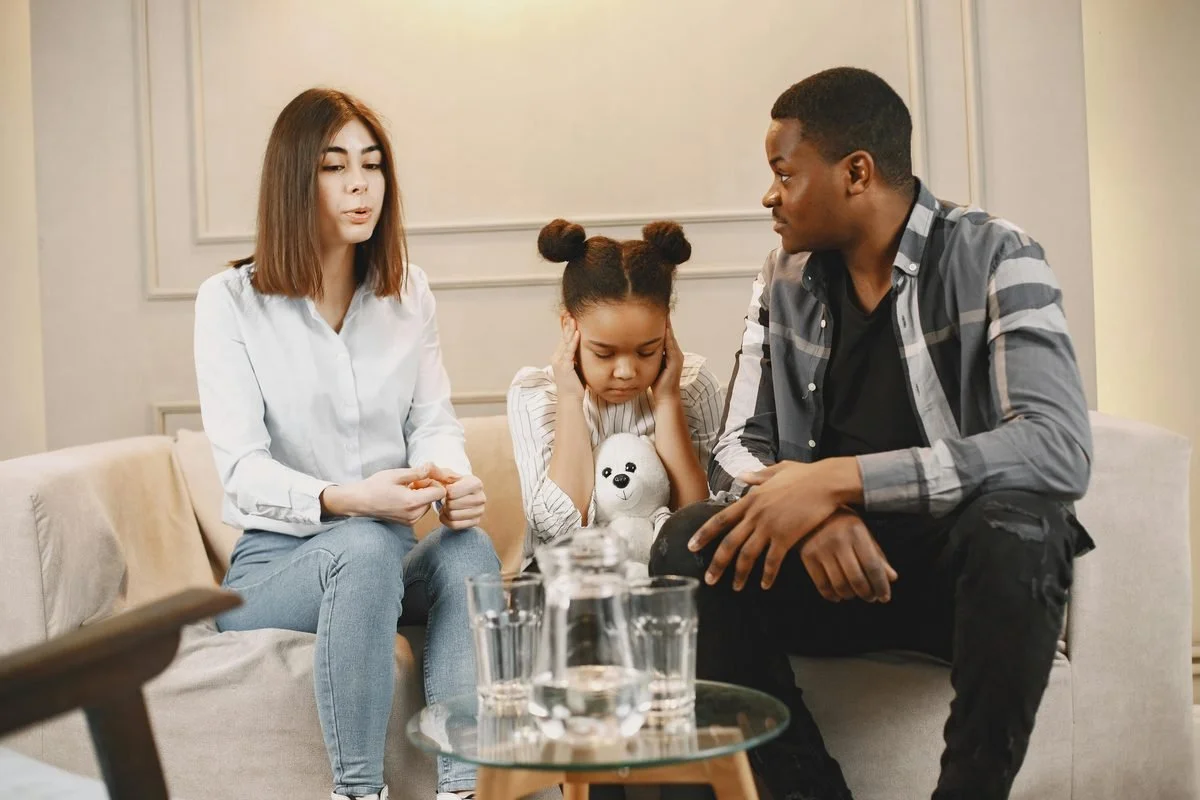
How Do You Heal From Being Raised in a Toxic or Emotionally Unstable Home?
Healing from a conditional or dysfunctional upbringing is real and possible, but it's rarely a straight line. It requires more than just understanding what happened intellectually. It requires doing the emotional work of grieving what you didn't get, challenging the beliefs you built to survive, and learning new ways of relating to yourself and others.
Some of what that healing process involves:
Naming what happened. A lot of people who grew up in dysfunctional families minimize their experiences. Comparing yourself to others who "had it worse" is one of the most common ways people dismiss their own pain. Your experience is valid regardless of how it compares to anyone else's.
Grieving the childhood you deserved but didn't have. This is often one of the most unexpected parts of the healing process. You may need to grieve not a loss that happened, but one that never existed. That grief is real, and it needs space.
Identifying the beliefs you formed to survive. "I am only lovable when I'm useful." "If I need things, I'll be abandoned." "I have to be perfect to be safe." These survival beliefs made sense as a child. As an adult, they're limiting your life.
Learning what healthy relationships actually feel like. If you grew up in a dysfunctional system, you may have no reference point for what safe, consistent love looks like. Part of healing is building that reference point, often through therapy, safe friendships, and intentional relationship work.
Working with a therapist who understands family systems and trauma. This kind of healing is difficult to do alone. A trauma therapist can help you make sense of your history, process the grief and anger that come with it, and build new patterns that serve you better.
Healing doesn't mean cutting your family off, forgiving everything, or pretending things weren't hard. It means getting to a place where your past no longer runs your present.
How Family Therapy Can Help You Understand and Break These Patterns
Family therapy isn't just for families who are currently in conflict. It's also a powerful space for adults who want to understand the family system they grew up in, how it shaped them, and what they can do differently going forward. You don't have to bring your family of origin into the room to benefit from a family systems approach.
Working with a family therapist can help you:
See the System, Not Just the Symptoms
Dysfunctional family dynamics rarely come from one bad person. They come from a system of patterns, roles, and rules that developed over generations. A family therapist can help you see the larger pattern you were part of, which makes it easier to understand why things happened the way they did without simply blaming yourself or one parent.
Understand the Role You Played
Most dysfunctional families assign roles to their children without anyone realizing it. Some of the most common roles:
The parentified child who became the emotional caretaker
The golden child who could do no wrong
The scapegoat who carried the family's tension
The invisible child who stayed quiet to survive
Understanding which role you played, and what it cost you, is an important part of the healing process. If the scapegoat role feels familiar, you can read more about it here in our blog “What To Do When Someone Is Using You As A Scapegoat.”
Break Intergenerational Patterns
One of the most powerful things about doing this work is the ripple effect it has. When you understand the patterns you inherited, you become capable of making different choices. Whether you have children of your own or not, breaking a cycle that may have been running in your family for generations is meaningful work.
Build New Relational Skills
If you didn't grow up with models of healthy communication, boundaries, or emotional attunement, you don't just automatically have those skills as an adult. Therapy can help you develop them intentionally, and practice using them in the relationships that matter most to you.
To learn if family therapy is right for you, read our blog “How to Decide if Family Counseling is the Right Fit for You.”
The family therapy services at Anchor Therapy are designed to support exactly this kind of work. Our therapists work with individuals and families in-person in Hoboken, NJ, and virtually in New Jersey, New York, and Florida who are ready to understand their history and build something different.
Signs You Might Still Be Carrying the Effects of a Conditional Upbringing
Sometimes the effects of growing up in a conditional or dysfunctional environment are obvious. Other times, they're buried under years of coping strategies that have become so habitual you don't realize they're there. Some signs that your upbringing may still be shaping how you live today:
You struggle to feel good about yourself without external validation from others
You find it hard to say no, or feel intense guilt when you do
You're highly attuned to other people's moods and feel responsible for managing them
You over-explain yourself or apologize constantly, even when you've done nothing wrong
You feel most comfortable giving in relationships and deeply uncomfortable receiving
You have a persistent inner critic that sounds a lot like someone from your childhood
You gravitate toward relationships that feel familiar, even when they aren't good for you
You find it hard to trust that good things, or good people, will last
Recognizing these patterns in yourself isn't a reason to feel ashamed. It's useful information. These are not character flaws.
They are adaptations that made sense in the environment you grew up in. The work of therapy is gently helping you figure out which of those adaptations you still need, and which ones are holding you back.

What Healing Actually Looks Like Day to Day
Healing from a conditional or dysfunctional upbringing doesn't mean you'll reach a point where the past never affects you. It means you develop enough self-awareness and new skills that the past doesn't run your life anymore. That shift happens gradually, and it often shows up in small moments before it shows up in big ones.
In practice, healing often looks like:
Noticing when you're people-pleasing and asking yourself what you actually want
Setting a boundary and sitting with the discomfort instead of immediately taking it back
Receiving a compliment without deflecting it
Choosing to stay in a healthy relationship even when it feels unfamiliar or "too easy"
Responding to your own mistakes with some kindness instead of harsh self-criticism
Feeling a difficult emotion without immediately trying to escape it
These moments might seem small, but they represent real change at the level of how your nervous system understands safety and connection. Each one is evidence that the patterns you inherited are not permanent.
In our clinical experience at Anchor Therapy, clients who do this work consistently describe a gradual but unmistakable shift. They start to feel less driven by fear of abandonment or disapproval, and more grounded in who they actually are. That groundedness is what makes everything else, better relationships, more confidence, more peace, possible.
You Deserved Unconditional Love Then, and You Deserve Support Now
If you grew up in a home where love felt conditional, the most important thing to understand is this: that was never about your worth. It was about the limitations of the adults around you. You were not too much, too difficult, or not enough. You were a child doing your best in a system that asked too much of you.
The patterns you developed to survive that system were smart and necessary at the time. But you're not a child anymore, and those patterns no longer have to run your life. With the right support, you can understand where they came from, grieve what you didn't get, and build a way of living and loving that actually fits who you are now.
The team at Anchor Therapy works with adults throughout New Jersey, New York, and Florida who are doing exactly this kind of work. If you're ready to stop repeating the patterns you grew up with and start building something different, we'd love to support you. You can reach out through the intake form below, or visit our Meet Our Therapists page to find the right fit.

Victoria Scala
is the Community Engagement Director, Office Manager, and Social Media Manager at Anchor Therapy in Hoboken, New Jersey. She is a graduate of the Honors College of Rutgers University-Newark and is currently studying Clinical Mental Health Counseling at the graduate level.
IF YOU’RE LOOKING FOR HELP FROM A PROFESSIONAL COUNSELOR TO ASSIST YOU IN MAKING POSITIVE CHANGES IN YOUR LIFE, CONTACT US
WORKING WITH US IS EASY
Fill out the contact form below.
Our intake coordinator will get back to you with more information on how we can help and to schedule an appointment. We will set you up with an experienced licensed therapist who specializes in what you're seeking help with and who understands your needs.
You’ll rest easy tonight knowing you made the first step to improve your life.
Having trouble with this form? Email us directly at info@anchortherapy.org with the information in the form.


Maybe you're the one who gets blamed no matter what actually happened, at home, at work, or even with friends. Something goes wrong, and somehow it lands on you. If that sounds familiar, there's a word for what's happening: scapegoat. A scapegoat is a person who's unfairly blamed for problems they didn't cause. Scapegoating shows up most in families, where it's often called being the family scapegoat.