You open TikTok to decompress for a few minutes and, forty-five minutes later, you've watched seventeen videos about attachment styles, taken a mental quiz about whether you have ADHD, and learned the name of a trauma response you've apparently been experiencing your whole life. You close the app feeling more informed, but also somehow more worried than you were before. Sound familiar?
TikTok anxiety is the psychological tension that builds when short-form video content, especially mental health content, triggers self-comparison, overstimulation, or compulsive scrolling in ways that leave you feeling worse rather than better. This blog explores both sides of the TikTok mental health conversation: the ways it can genuinely increase self-awareness, the ways it quietly fuels anxiety, and how to tell the difference in your own life.
Anchor Therapy is a counseling center in Hoboken, NJ with mental health therapists specialized in helping children, teens, adults, couples, and families with anxiety, depression, relationship issues, trauma, life transitions, and more. Anchor Therapy is accepting new clients and is now providing in-person sessions and teletherapy sessions to residents of New Jersey, New York, and Florida.
what is mental health TikTok?
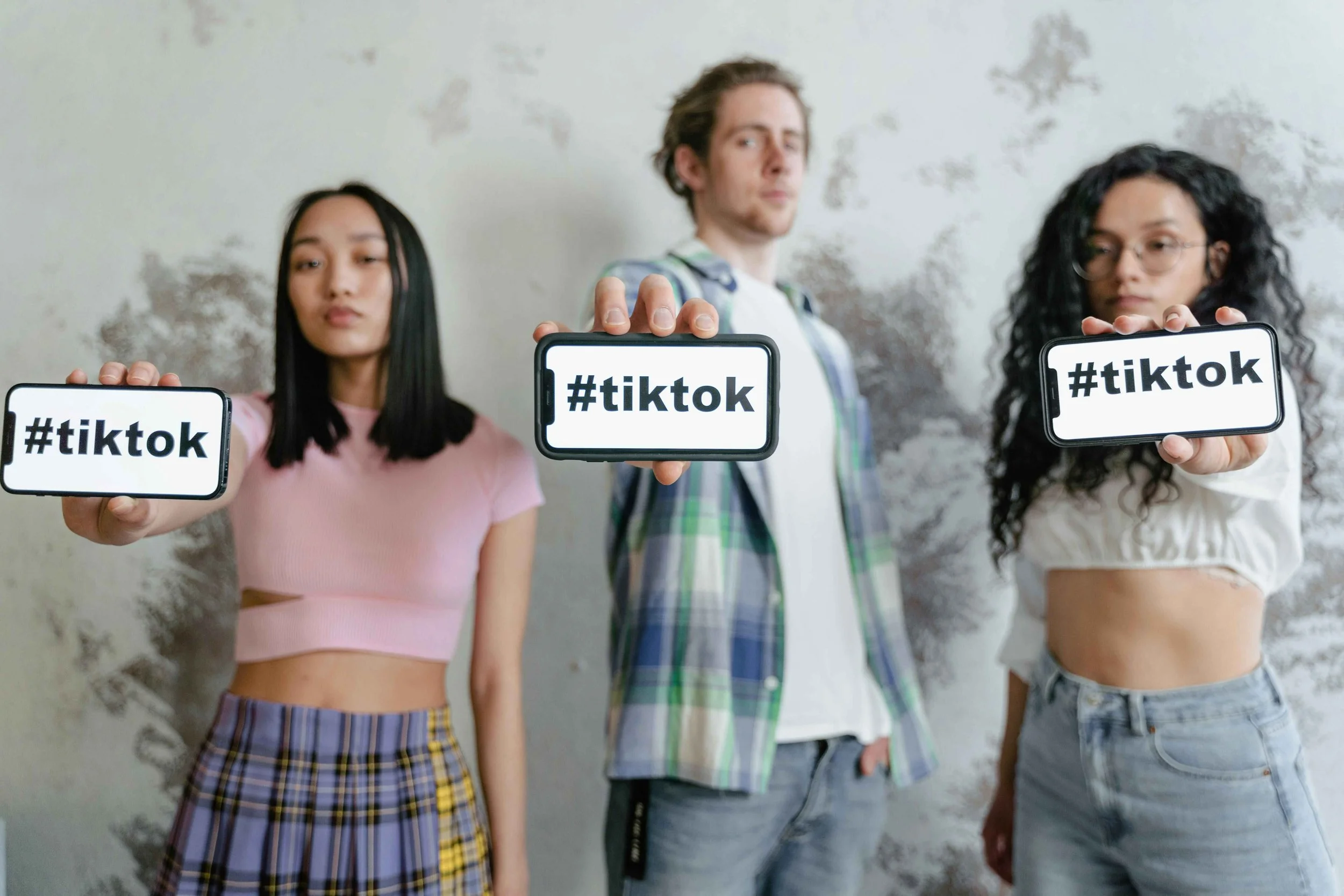
Mental health TikTok is a subgenre of content on the platform where therapists, ex-therapists, coaches, and everyday creators share information about psychological diagnoses, trauma responses, attachment styles, nervous system regulation, and therapeutic frameworks like parts work, inner child healing, and CBT. It has grown into one of the most-watched categories on the platform, with hashtags like #mentalhealthtiktok, #therapytok, and #traumahealing accumulating billions of views.
Some of this content is genuinely good. Licensed clinicians who use TikTok responsibly can make mental health concepts more accessible to people who might never otherwise encounter them. For a lot of people, TikTok was the first place they heard the words "anxious attachment," "hypervigilance," or "emotional flashback," and that language gave them a way to understand experiences they'd been carrying alone for years.
The problem is that the platform can't distinguish between a licensed therapist with fifteen years of clinical experience and a creator who read a psychology book last month. Both can go viral. Both can sound equally credible in a 60-second video. And both are reaching people who are genuinely struggling and looking for answers.
There's also the phenomenon of parasocial connection. When you follow creators who share vulnerable, intimate content, your brain begins to treat them like people you know. You feel invested in their stories. You feel their emotional highs and lows. Multiply that across dozens of creators and hours of content, and you're carrying a lot of other people's emotional weight alongside your own.
That's what makes mental health TikTok worth examining closely. Not because it's all bad, but because the gap between what it promises and what it can actually deliver is wide enough to cause real harm if you don't know what you're looking at.
Is Mental Health TikTok Bad for Anxiety?
Mental health TikTok is not inherently harmful, but certain patterns of engagement with it consistently make anxiety worse. The algorithm learns quickly. If you've watched one video about anxious attachment, you'll soon have a feed full of trauma responses, nervous system dysregulation, and attachment theory content, served back to you on a loop whether it's helping you or not.
Research published in Cureus (NCBI) found that adolescents frequently turn to TikTok for emotional self-regulation, seeking anxiety-related content not just for information but as a coping mechanism. The problem is that passively consuming content about anxiety doesn't resolve anxiety. It can actually keep the nervous system in a low-grade state of alertness, making the underlying symptoms harder to address.
There's also the comparison factor. Mental health content on TikTok tends to be highly personal and emotionally charged. Watching someone describe their symptoms in vivid detail can feel validating, but it can quickly become a measuring stick.
You start asking yourself whether your experience is severe enough, whether you have the right diagnosis, whether you're processing things the right way. Check out our blog “How Does Social Media Affect Depression?”.
That kind of constant self-comparison is a reliable driver of anxiety, not a relief from it. None of this means the content is worthless. It means the way you're consuming it matters just as much as what you're watching.
Is Self-Diagnosis From TikTok Accurate?
Sometimes the content resonates because it's genuinely accurate. But TikTok self-diagnosis is unreliable more often than it is accurate, and the consequences of getting it wrong matter. Mental health diagnoses require a thorough clinical assessment by a trained professional. What TikTok provides is a 60-second clip made by someone who may or may not have any clinical training, describing symptoms that could apply to a wide range of people in a wide range of situations.
A further concern is that TikTok's algorithm amplifies content that performs well, not content that is clinically accurate. A video gets pushed to millions of viewers because it's relatable and emotionally compelling, not because it's been reviewed by a psychologist. The most popular mental health content on TikTok tends to describe symptoms in broad, universal terms that a large number of people will find themselves in, which feels validating but doesn't constitute a diagnosis.
Research published in NCBI found that #anxiety alone had accumulated billions of views on TikTok, with content ranging from evidence-based information to completely unverified claims. The sheer volume of content, combined with how difficult it is to assess credibility in a short video, makes it easy to absorb misinformation without realizing it.
Some of the diagnoses that have gone most viral on TikTok, and what to know about each:
ADHD. ADHD content exploded on TikTok starting around 2020, with creators describing symptoms like distraction, forgetfulness, and emotional sensitivity. Many of these symptoms overlap significantly with anxiety, depression, and sleep deprivation, which means the content resonates broadly without being diagnostic.
Autism. Late-diagnosed autism content, particularly among women and girls, has found a large audience on TikTok. Some of this content has been genuinely helpful in raising awareness. But autism is a complex spectrum condition that requires comprehensive evaluation, and the traits described in viral videos often apply to neurotypical people as well.
BPD. Borderline Personality Disorder content on TikTok tends to focus on emotional intensity, fear of abandonment, and relationship patterns. BPD is frequently over-identified and under-understood, and self-diagnosing with a personality disorder based on a video can carry real stigma and anxiety without the clinical support to make sense of it.
CPTSD. Complex PTSD content has become one of the most shared mental health topics on TikTok, covering nervous system responses, hypervigilance, and childhood trauma. Some of it is clinically informed. Much of it conflates normal stress responses with trauma symptoms in ways that can make people feel more dysregulated, not less.
Anxious and avoidant attachment. Attachment content is everywhere on mental health TikTok, and some of it is genuinely useful for helping people understand relationship patterns. The problem is that attachment styles are often presented as fixed identities rather than patterns that can shift with insight and support, which can leave people feeling stuck rather than empowered.
OCD. OCD is one of the most misrepresented conditions on TikTok. The platform has popularized the idea that OCD means being neat or particular, which is rarely accurate. At the same time, people with genuine OCD, including the intrusive-thought subtype, often don't recognize themselves in the TikTok content at all, which delays them getting the right help.
This doesn't mean TikTok can't be a useful starting point. A lot of people first encounter the language of mental health on TikTok and use that as a prompt to seek proper support. The problem comes when the TikTok content becomes the endpoint rather than the beginning of the conversation.
Am I Healing or Overanalyzing?
This is one of the most important questions to sit with if you're spending a lot of time on mental health TikTok. Genuine self-awareness feels grounding. It helps you understand your patterns, make better choices, and extend more compassion to yourself. Overanalyzing tends to feel like the opposite: spinning, heightened, and more uncertain about yourself than before.
The tricky part is that both can look identical from the outside. You're watching the same videos, using the same language, following the same creators. The difference is in what's happening internally while you do it. Healing tends to create forward movement. Overanalyzing tends to create more questions without answers, more labels without clarity, and a growing sense that something is fundamentally wrong with you that needs to be identified and fixed before you can be okay.
There's also a version of mental health TikTok engagement that functions as avoidance. Spending hours researching your symptoms can feel productive because it's effortful and focused. But if that research is substituting for the harder work of actually sitting with discomfort, talking to someone, or making changes in your life, it's keeping you busy without moving you forward. That's worth being honest with yourself about.
A few questions worth asking yourself:
Does the content help you understand yourself better, or does it mostly make you feel like something is wrong with you?
Are you using what you learn to make actual changes, or are you just accumulating more labels and frameworks?
Do you feel calmer and more grounded after engaging with mental health content, or more anxious and preoccupied?
Are you using TikTok to avoid dealing with something, or to better understand it?
Has your sense of your own identity become more stable since you started engaging with this content, or more fragmented?
At Anchor Therapy, we often work with clients, including teenagers, who come in with a list of self-diagnoses gathered from social media. Sometimes those labels are surprisingly accurate. More often, they've added another layer of anxiety on top of whatever was already happening.
The goal of self-awareness is to live with more ease, not less. A framework that helps you understand yourself should leave you feeling more capable of handling your life, not more preoccupied with cataloguing what's wrong with it. If your relationship with mental health content is making daily life harder, that's a signal worth listening to.
How Social Media Anxiety Affects Teens Differently
When a video describes a mental health experience in vivid detail, a teenager's brain is more likely to absorb it as personally relevant, to internalize the label, and to start organizing their experience around it. This is sometimes called symptom adoption, and it's a documented phenomenon in adolescent mental health. It happens more readily in adolescence because the teenage brain is still forming its sense of identity, making it more permeable to outside definitions of who someone is and what they're experiencing.
For teenagers especially, this pattern can become deeply entrenched. The adolescent brain is still developing the prefrontal cortex, which governs impulse control and long-term thinking. That means teens are neurologically more vulnerable to compulsive use patterns than adults, and more likely to reach for the phone as an automatic response to any uncomfortable feeling. If you or your teenager can't put the phone down even when you want to, that's worth paying attention to. It's not a character flaw. But it is information.
The social comparison dimension hits harder in adolescence too. Watching peers or older creators describe their emotional lives in polished, articulate terms can make a teenager feel like they're doing their own emotions wrong. Like everyone else has figured out the language for their inner life and they haven't. That's a lonely and disorienting feeling, and it tends to drive more scrolling rather than less.
If your teenager is spending significant time on mental health TikTok and seems more anxious, more self-critical, or more preoccupied with diagnosis and labels than before, it's worth having a conversation. Not to take the phone away, but to understand what they're looking for.
Check out our blog "Do I Have A Social Media Addiction?" for more guidance.
When Mental Health TikTok Becomes a Barrier to Real Support
There's a difference between occasionally feeling overstimulated by social media and experiencing anxiety that's genuinely interfering with daily life. Some signs that it might be time to talk to someone:
Your teenager's anxiety seems to have increased alongside their TikTok use
They're spending hours a day consuming mental health content and seem more distressed, not less
They've self-diagnosed with multiple conditions and are now organizing their identity around those labels
Sleep is consistently disrupted by evening phone use
They're withdrawing from in-person relationships in favor of online connection
You're seeing compulsive phone use that they can't seem to interrupt even when they want to
Teen counseling can help in a few specific ways here. A therapist can give your teenager the kind of honest, personalized reflection that TikTok can't: not a 60-second video made for a mass audience but a real conversation about what they're actually experiencing. Therapy also helps teenagers develop the internal tools to self-regulate without needing to reach for a screen.
The teen counseling services at Anchor Therapy are designed for exactly this kind of work. Our therapists work with teenagers in-person in Hoboken, NJ, and virtually in New Jersey, New York, and Florida who are navigating anxiety, identity questions, and the pressure of growing up in a world that's always online.
Finding a Healthier Relationship With Mental Health Content
You don't have to choose between staying informed and protecting your mental health. But it does require being intentional about how you use the platform, rather than letting the algorithm decide for you. A few things that actually help:
Notice how you feel before, during, and after scrolling, and let that data inform when and how long you use the app
Follow creators who are credentialed or who point you toward professional support, not just relatable content
Treat anything you learn on TikTok as a starting point for a conversation with a professional, not as a final answer
Set a time limit that you actually stick to, ideally not in the hour before bed
If a piece of content makes you feel worse about yourself, scroll past it. You don't have to finish every video
Check out our blog on “5 Ways to Deal with Digital Burnout.”
What Our Clients Bring Into Session From TikTok
In our Hoboken practice, we regularly see clients who arrive with a list of labels they've gathered from mental health TikTok: CPTSD from a difficult childhood, BPD from an emotional reaction they had once, ADHD from difficulty focusing during a stressful period of their life. Sometimes those labels point us in a useful direction. More often, what we find in the actual clinical work is something more nuanced, an anxiety disorder that was never treated, a grief response that was never given space, or a relationship pattern that makes complete sense once we understand the family system they grew up in. The TikTok label got them in the door, which matters. But the work of figuring out what's actually happening requires a real conversation, not a comment section.
TikTok can be a place where people feel seen and find language for experiences they couldn't name before. That's genuinely valuable. The goal isn't to dismiss it but to use it in a way that leaves you more grounded, not more anxious. To learn about how to foster a healthy balance with social media, read our blog “Navigating Social Media: A Mental Health Therapist’s Guide to Balance and Well-Being.”
If you or your teenager is struggling with anxiety that social media has made worse, the team at Anchor Therapy is here to help. We work with clients in-person in Hoboken, NJ, and virtually in New Jersey, New York, and Florida. You can get started through our intake form below, or visit our Meet Our Team page to find the right fit.

Victoria Scala
is the Community Engagement Director, Office Manager, and Social Media Manager at Anchor Therapy in Hoboken, New Jersey. She is a graduate of the Honors College of Rutgers University-Newark and is currently studying Clinical Mental Health Counseling at the graduate level.
IF YOU’RE LOOKING FOR HELP FROM A PROFESSIONAL COUNSELOR TO ASSIST YOU IN MAKING POSITIVE CHANGES IN YOUR LIFE, CONTACT US
WORKING WITH US IS EASY
Fill out the contact form below.
Our intake coordinator will get back to you with more information on how we can help and to schedule an appointment. We will set you up with an experienced licensed therapist who specializes in what you're seeking help with and who understands your needs.
You’ll rest easy tonight knowing you made the first step to improve your life.
Having trouble with this form? Email us directly at info@anchortherapy.org with the information in the form.


Maybe you're the one who gets blamed no matter what actually happened, at home, at work, or even with friends. Something goes wrong, and somehow it lands on you. If that sounds familiar, there's a word for what's happening: scapegoat. A scapegoat is a person who's unfairly blamed for problems they didn't cause. Scapegoating shows up most in families, where it's often called being the family scapegoat.